
Quick answer: Water hardness comes from dissolved calcium and magnesium. In industry it forms scale in boilers, cooling towers and RO plants. It can be removed by softening or RO, or controlled with scale inhibitors such as HEDP, PAA and HPMA.
Hardness classification (as CaCO₃)
| mg/L | Class |
|---|---|
| 0–60 | Soft |
| 61–120 | Moderately hard |
| 121–180 | Hard |
| > 180 | Very hard |
Treatment options
- Softener: ion exchange for boiler feed.
- RO: removes hardness and TDS – protect it with antiscalant.
- Scale inhibitors: keep hardness in solution in cooling water.
Check your scaling risk with the LSI.
Frequently asked questions
What causes hard water?
Dissolved calcium and magnesium salts picked up as water passes through limestone and minerals.
How do industries treat hard water?
By softening, RO, or by dosing scale inhibitors that keep hardness from depositing.
Products in this guide
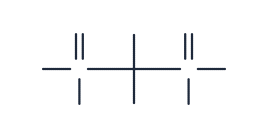
HEDP 60
HEDP 60, ZEELCHEM™ 101, is 1-Hydroxyethylidene-1,1-Diphosphonic Acid – an organophosphonate scale and corrosion inhibitor…
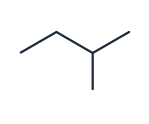
Polyacrylic Acid
Polyacrylic Acid (PAA), ZEELCHEM™ 1000, is a low-molecular-weight anionic homopolymer of acrylic acid. It works as a…
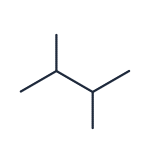
Polymaleic Acid
Polymaleic Acid (HPMA), ZEELCHEM™ 200, is a low-molecular-weight polycarboxylic acid that controls carbonate scale even at…
Related articles
Scale Inhibitors: Types, How They Work & Dosage
What a scale inhibitor is, how threshold inhibition works, the main types (phosphonates and polymers) and typical dosage in cooling, boiler and RO systems.
Langelier Saturation Index (LSI) Explained with Example
What the Langelier Saturation Index means, how to calculate LSI, and how to use it to predict scaling or corrosion in water systems.
How to Choose a Water Treatment Chemical Supplier in India (Gujarat Guide)
Checklist for choosing a water treatment chemical manufacturer or supplier in India – certifications, COA, technical support, logistics – with a Gujarat focus.