
Quick answer: An RO antiscalant is a polymer and phosphonate blend dosed into reverse osmosis feed water to stop calcium carbonate, calcium sulfate, barium sulfate and silica from crystallising on the membrane. Typical doses are 2–5 mg/L of product in the feed, calculated from feed flow and confirmed with a projection based on your water analysis.
Why RO membranes scale
As water passes through an RO element, pure water permeates and salts concentrate in the reject. At 75% recovery the concentrate is about four times the feed concentration, so sparingly soluble salts exceed saturation near the tail elements. Scale cuts permeate flow, raises pressure and can permanently damage membranes.
How an antiscalant works
- Threshold inhibition – a few ppm keep supersaturated salts in solution (phosphonates such as ATMP and DTPMP).
- Crystal modification – distorts crystals so they cannot stick.
- Dispersion – polymers such as AA/AMPS copolymer keep iron, silt and colloids moving.
Antiscalant dosage calculation
| Step | Example |
|---|---|
| Feed flow | 10 m³/h |
| Target dose | 3 mg/L (= 3 g/m³) |
| Product per hour | 10 × 3 = 30 g/h |
| Per day | 30 × 24 = 720 g/day ≈ 0.72 kg/day |
| Dosing pump (10% solution) | 7.2 L/day ≈ 0.3 L/h |
How to choose the right RO antiscalant
- High hardness / alkalinity: phosphonate-rich blend.
- High silica: speciality silica-dispersing polymer.
- Barium / strontium present: DTPMP-based sulfate control.
- Phosphorus discharge limits: phosphorus-free polymeric antiscalant.
ZEELCHEM™ 9003 is our standard RO antiscalant. See the full RO chemicals range, and read our RO membrane cleaning guide for what to do once fouling appears.
Frequently asked questions
What is the normal dosage of RO antiscalant?
Most RO plants dose 2–5 mg/L of antiscalant on feed flow. The exact dose depends on feed water analysis, recovery and temperature.
Can I use any antiscalant with any membrane?
Use an antiscalant compatible with polyamide thin-film composite membranes and never overdose, as excess polymer can foul membranes.
Is RO antiscalant the same as a cleaning chemical?
No. Antiscalant prevents scale during operation; cleaning chemicals remove deposits during an offline clean-in-place.
Products in this guide
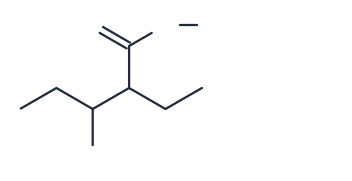
Co-Polymer of AA/AMPS
AA/AMPS Copolymer, ZEELCHEM™ 3100, is a sulfonated acrylic copolymer that stabilises calcium phosphate, zinc and iron and…
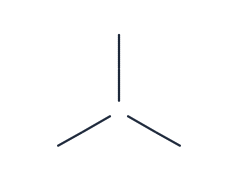
ATMP 50
ATMP 50, ZEELCHEM™ 111, is Amino Tris(Methylene Phosphonic Acid) – a cost-effective phosphonate with excellent threshold…
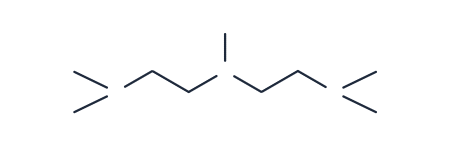
DTPMP
DTPMP, ZEELCHEM™ 131, is Diethylenetriamine Penta(Methylene Phosphonic Acid) – a five-phosphonate-group chelant that is…
Related articles
HEDP vs ATMP vs PBTC vs DTPMP: Which Phosphonate Should You Choose?
Side-by-side comparison of HEDP, ATMP, PBTC, DTPMP and PAPEMP phosphonates – scale control, chlorine stability, temperature and best applications.
RO Membrane Cleaning: Chemicals & Step-by-Step CIP Procedure
When to clean RO membranes, which acid and alkaline cleaning chemicals to use, and a step-by-step clean-in-place (CIP) procedure.
HEDP Uses in Water Treatment: Dosage, Benefits & Applications
HEDP (1-hydroxyethylidene-1,1-diphosphonic acid) uses in cooling water, boilers, textiles and detergents – dosage, benefits and how it compares with ATMP and PBTC.