Step 1 – Collect system data
Record recirculation rate, ΔT, system volume, metallurgy (MS, Cu, SS), the hottest exchanger skin temperature, and current problems such as scale, corrosion, fouling or algae.
Step 2 – Analyse make-up water
Measure pH, conductivity/TDS, Ca and Mg hardness, M-alkalinity, chloride, sulphate, silica, iron, manganese, phosphate, turbidity and COD (for recycled water).
Step 3 – Set target cycles
Multiply each make-up species by candidate cycles and compare with limits: silica ≤ 150–200 mg/L, chloride by metallurgy, and LSI by program strength. The first species to hit its limit sets the maximum cycles. See cycles of concentration.
Step 4 – Choose the scale and deposit package
| Main risk | Polymer choice | Partner |
|---|---|---|
| CaCO₃, LSI < 2 | PAA 1000 | HEDP |
| CaCO₃, LSI 2 – 3, alkaline | MA/AA 3000 or HPMA 200 | PBTC |
| Ca-phosphate / zinc | AA/AMPS 3100 | HEDP/PBTC |
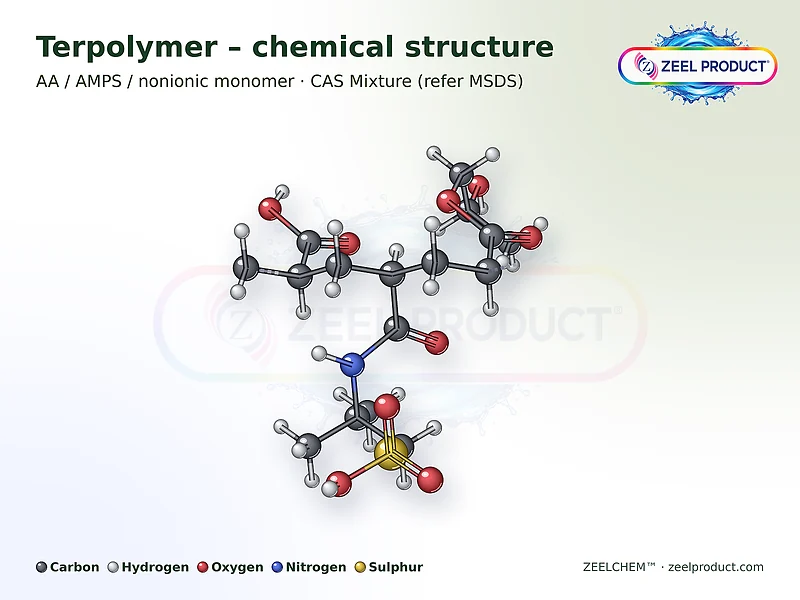
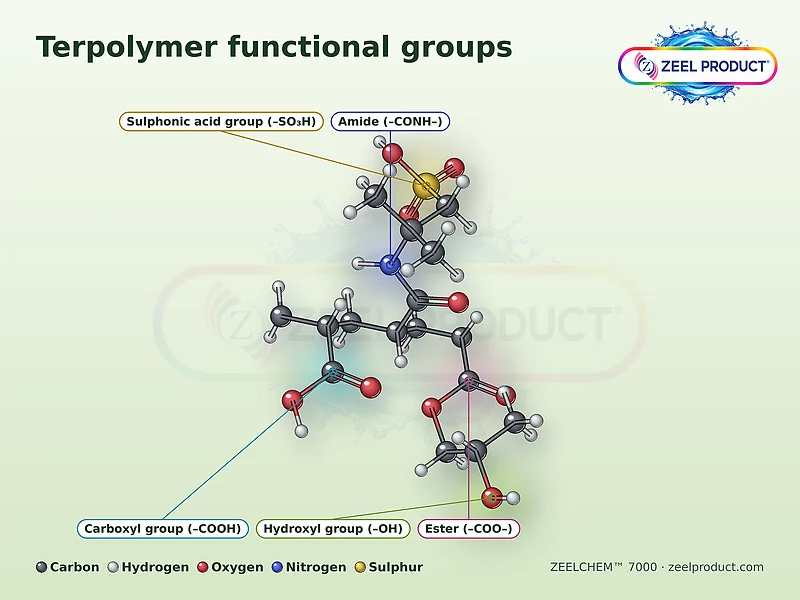
| Multiple + high cycles | Terpolymer 7000 | PBTC |
Step 5 – Corrosion control
Choose a phosphate, zinc or all-organic approach based on discharge rules and pH. See phosphate programs and non-phosphorus programs. Add TTA/BTA for copper.
Step 6 – Microbiological control
Use continuous or intermittent oxidising biocide (chlorine, chlorine dioxide or bromine) plus a weekly non-oxidising biocide (isothiazolinone, DBNPA or glutaraldehyde). Keep free chlorine at 0.2–0.5 mg/L. Biocides are in the ZEELCHEM™ range. Control foaming with a ZEELCHEM™ defoamer if needed.
Step 7 – Dosing and control
Calculate product demand with the dosage calculator. Automate blowdown on conductivity, and pace chemical feed to make-up or blowdown.
Step 8 – Monitor and optimise
- Daily: pH, conductivity, free chlorine.
- Weekly: hardness, alkalinity, phosphate, polymer residual, calcium balance.
- Monthly: microbiology (TBC, SRB), iron.
- Quarterly: corrosion coupons and exchanger inspection.
 FEATURED PRODUCT
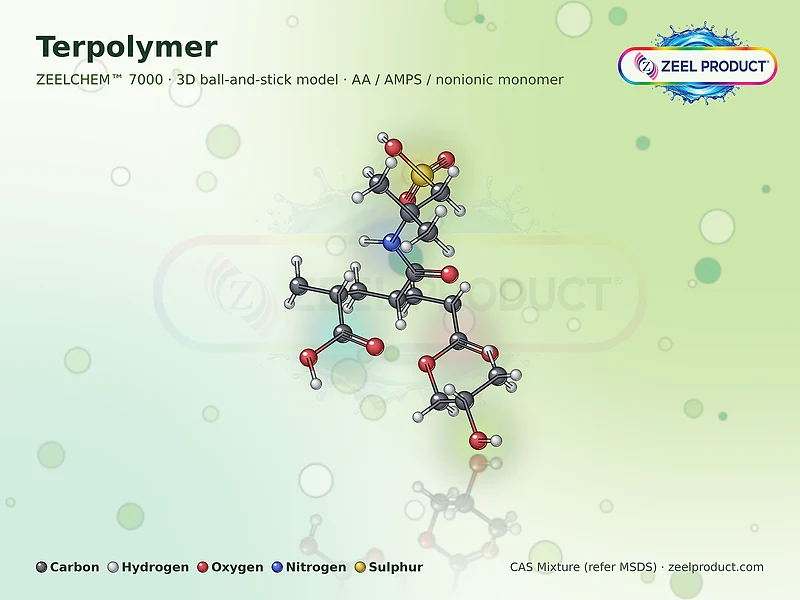
ZEELCHEM™ 7000 – Terpolymer
Three-monomer terpolymer for the toughest cooling water: high cycles, high pH, phosphate, zinc and iron together.
FAQ
What chemicals are used in cooling tower treatment?
Scale inhibitors (polymers and phosphonates), corrosion inhibitors, biocides, dispersants, and sometimes pH control chemicals and defoamers.
How often should cooling water be tested?
pH and conductivity daily; hardness, alkalinity and inhibitor levels weekly; microbiology monthly.
Who can help design my program?
ZEEL PRODUCT's technical team can review your water analysis and recommend a program.
More from ZEEL PRODUCT: zeelproduct.com · zeelproduct.net · ZEELCHEM™ range · online shop · zeelproductonline.co.in