What is Polyacrylic Acid ZEELCHEM™ 1000?
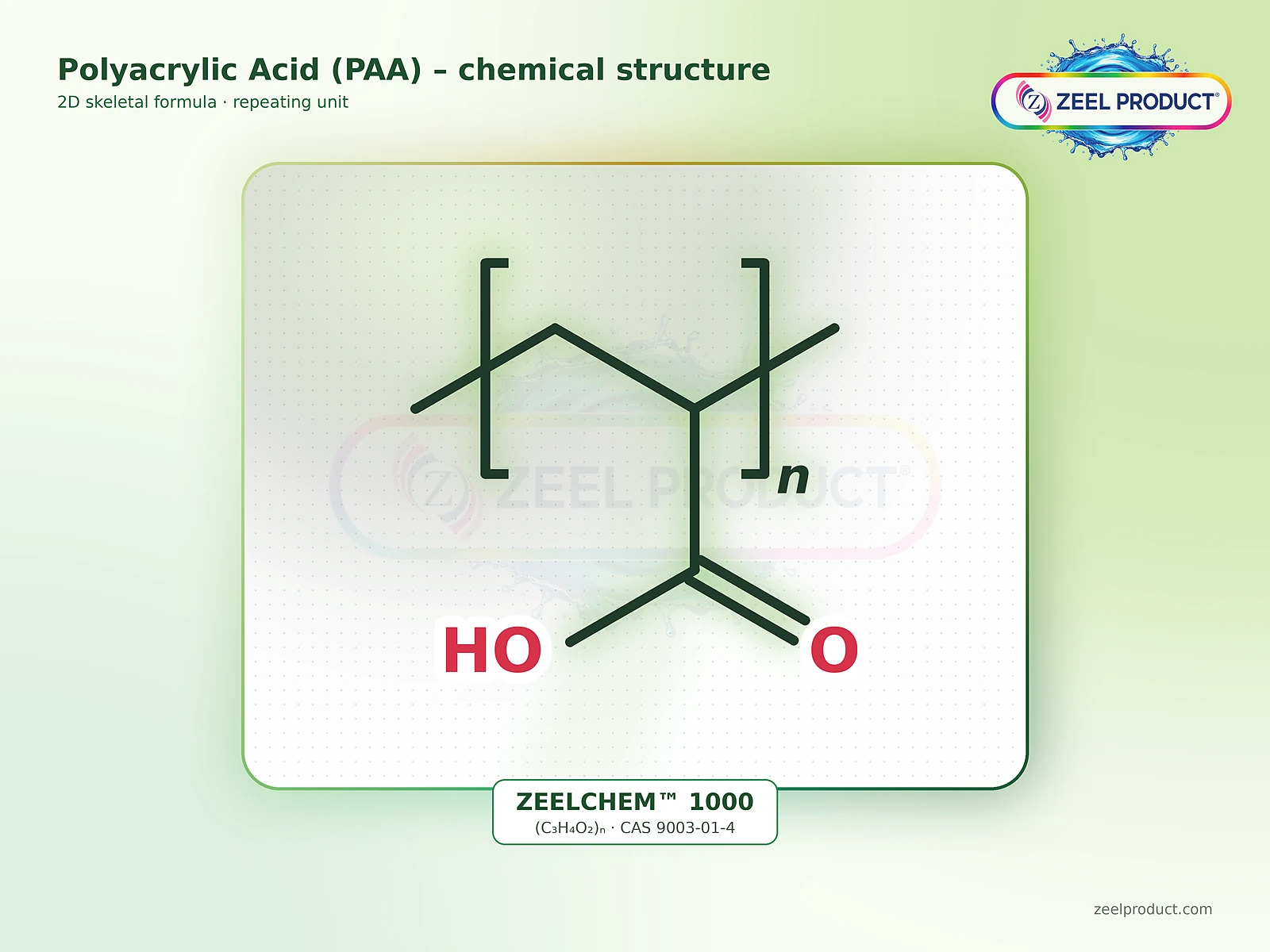
ZEELCHEM™ 1000 is a low molecular weight polyacrylic acid (PAA) homopolymer supplied as a clear aqueous solution. Its chain carries one carboxylic acid group on every repeat unit. That high charge density makes it a strong threshold scale inhibitor and dispersant: a few mg/L keeps calcium carbonate, calcium sulphate and suspended mud, silt and corrosion products from depositing on heat-exchanger tubes, cooling-tower fill, boiler surfaces and membranes.
PAA is the most widely used polymer in industrial water treatment. It is used alone in light-duty systems and, more often, blended with phosphonates such as HEDP, ATMP and PBTC and with zinc to build complete cooling water and RO antiscalant formulations. ZEEL PRODUCT manufactures ZEELCHEM™ 1000 in Vadodara, Gujarat, under ISO 9001:2015, ISO 14001:2015 and ISO 22000:2018 systems, and dispatches it across India.
Technical specifications
| Parameter | Typical value |
|---|---|
| Appearance | Colourless to light yellow, clear viscous liquid |
| Chemical name | Polyacrylic acid (homopolymer of acrylic acid) |
| Solid content | ≥ 48.0 % |
| Free monomer (as acrylic acid) | ≤ 0.50 % |
| pH (1 % aqueous solution) | 2.0 – 3.0 |
| Density at 20 °C | ≥ 1.15 g/cm³ |
| Average molecular weight (Mw) | 1,800 – 5,000 |
| Solubility | Completely miscible with water |
| CAS No. | 9003-01-4 |
| HS Code | 3906 90 90 |
Specifications are typical values. Exact results for each batch are given in the Certificate of Analysis (COA) supplied with every dispatch.
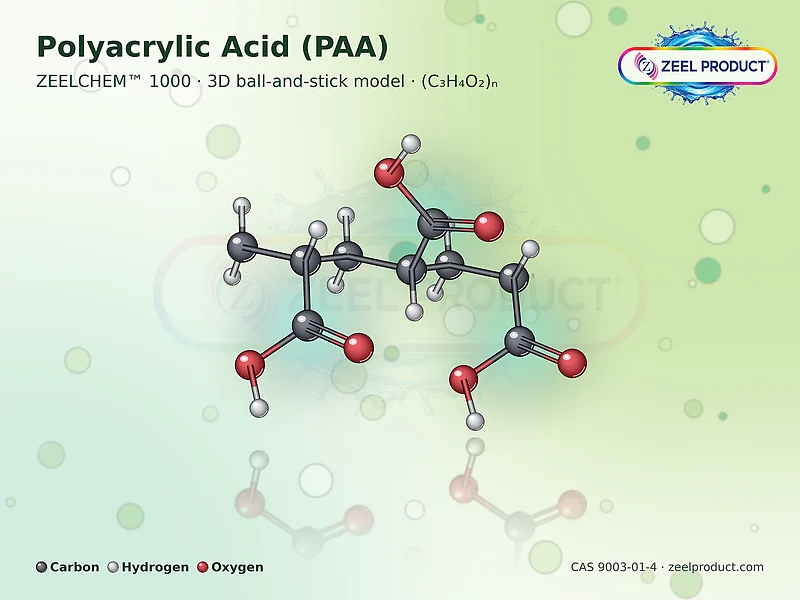
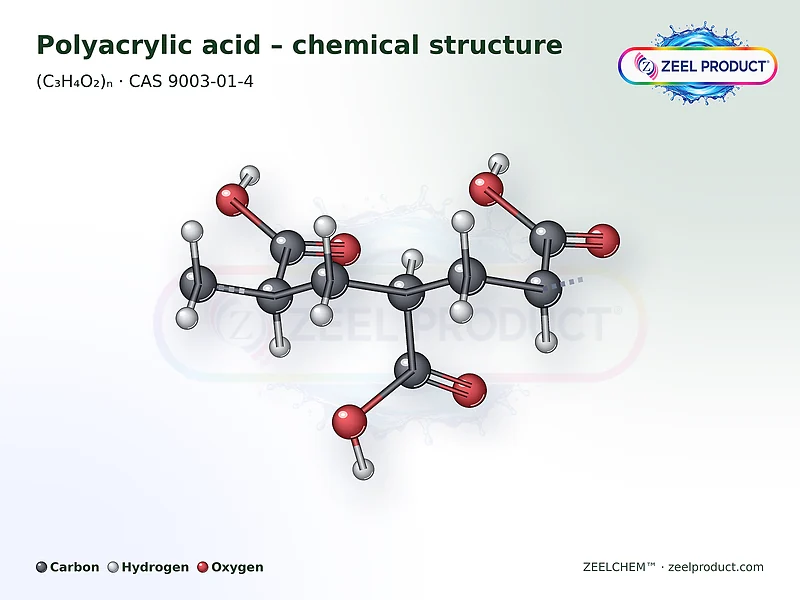
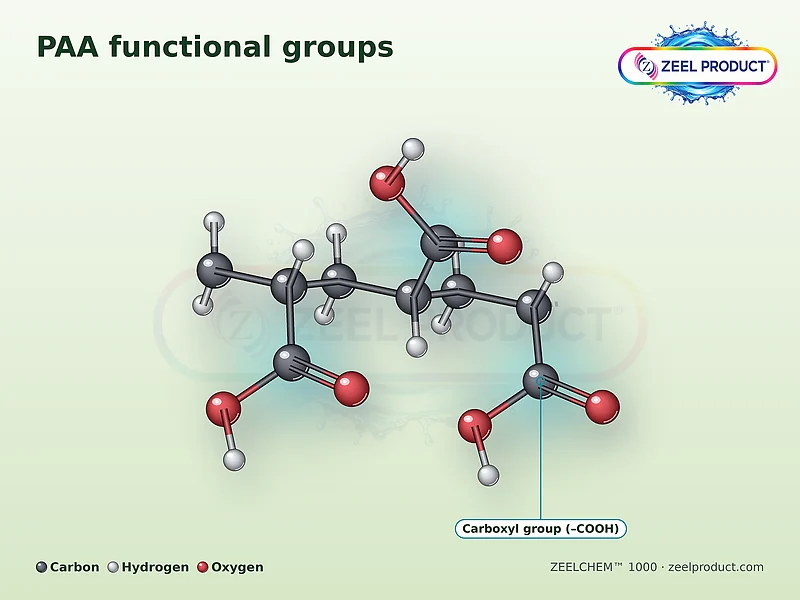
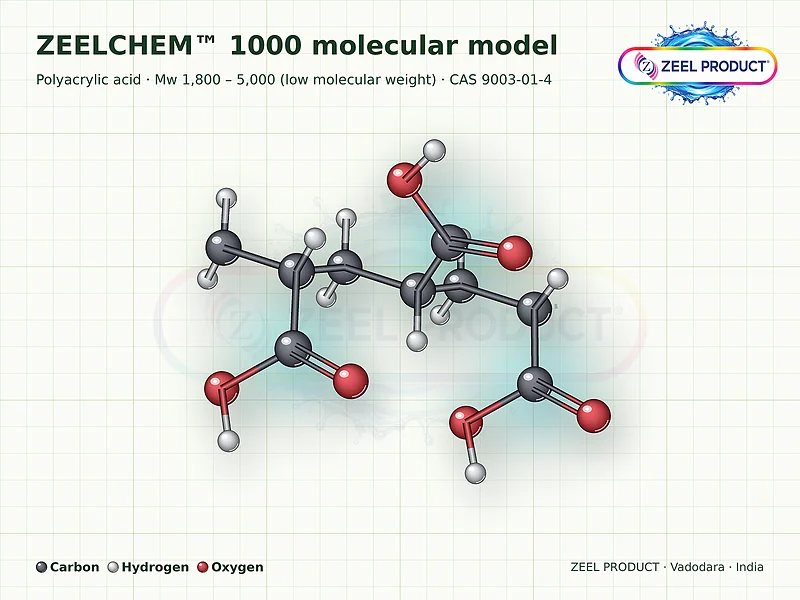
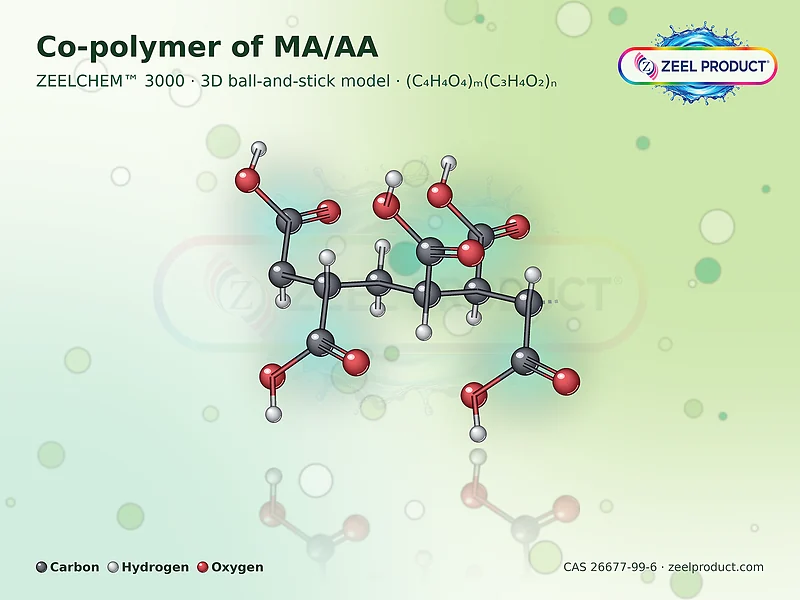
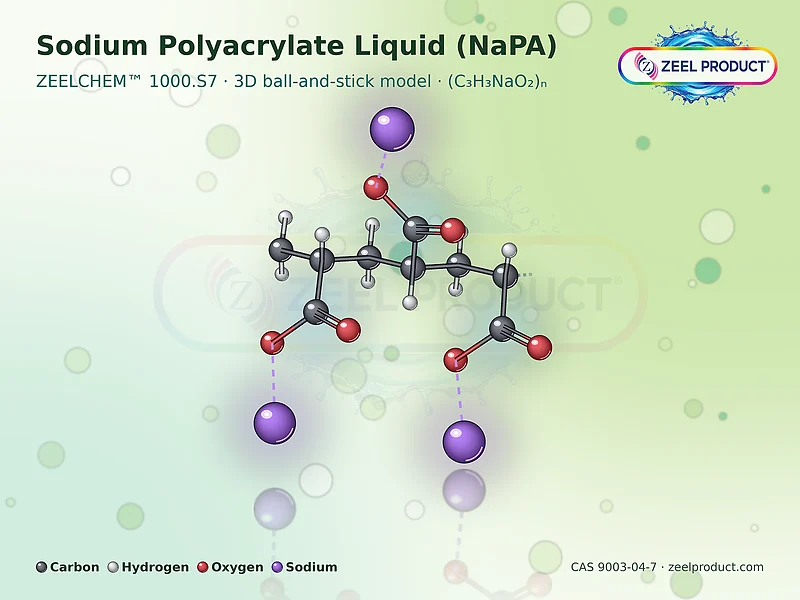
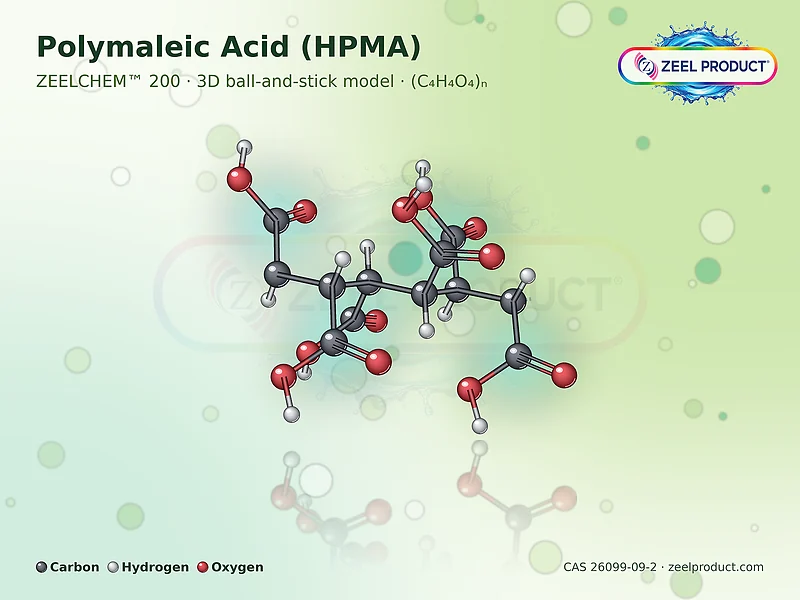
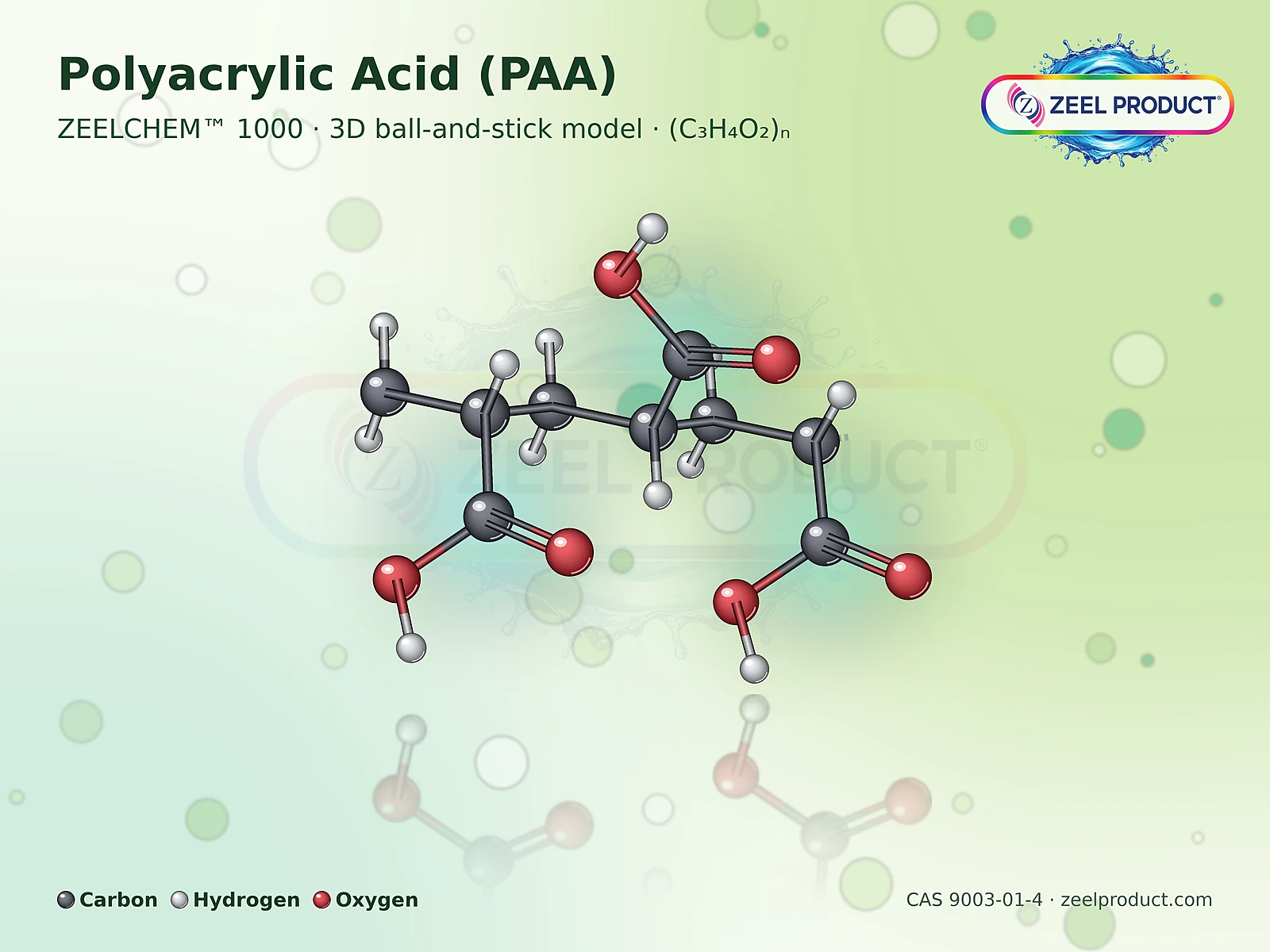
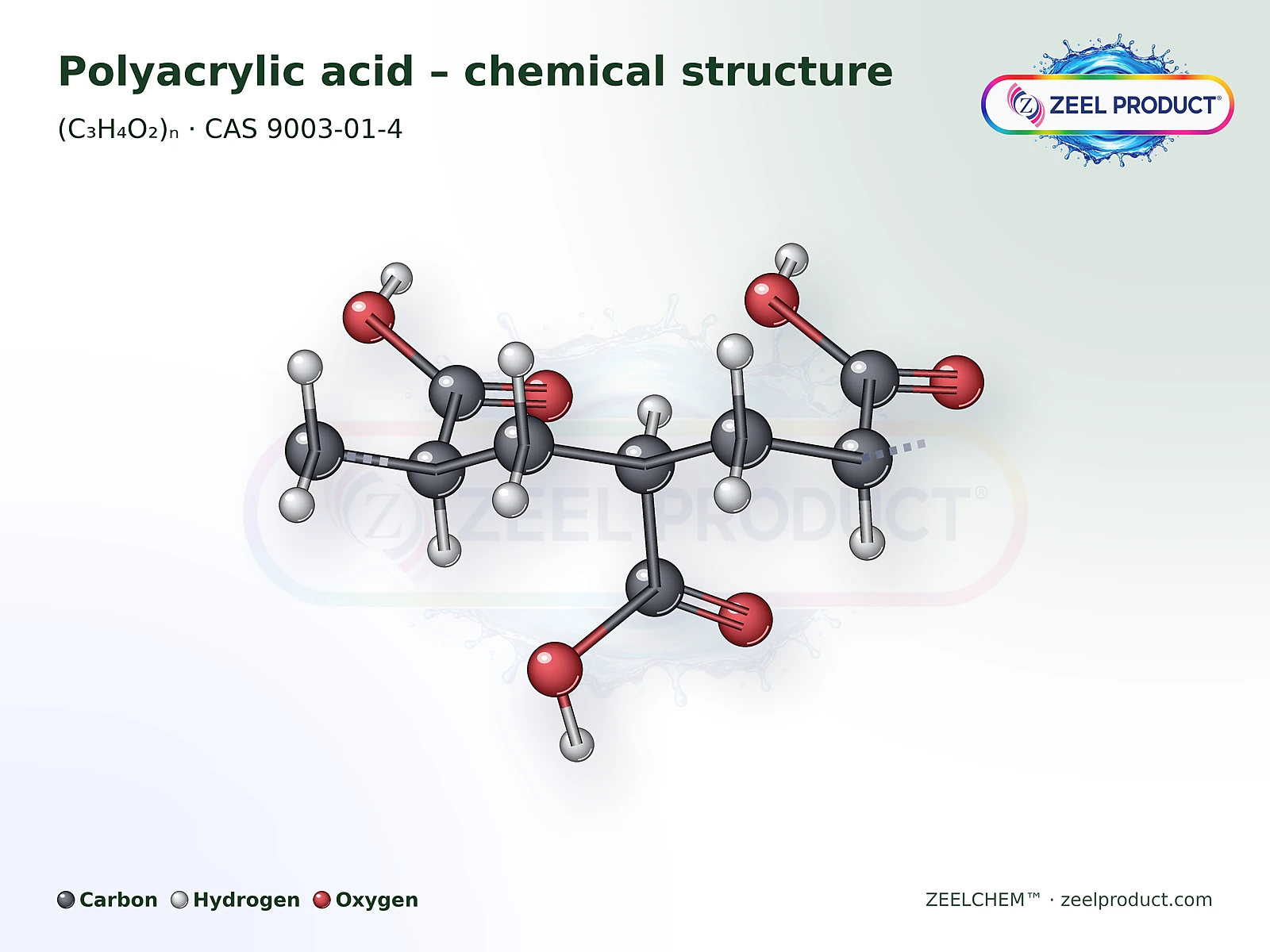
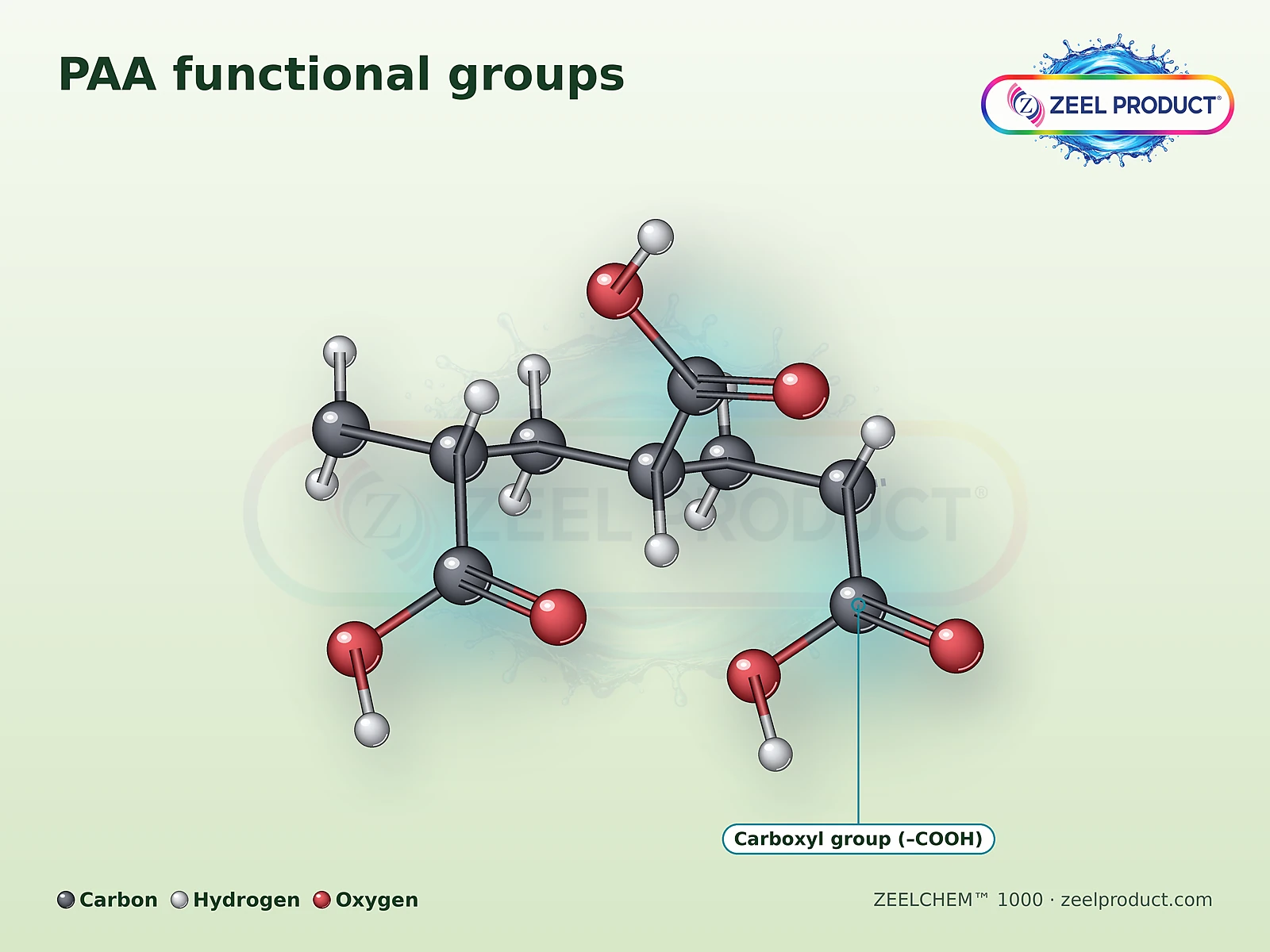
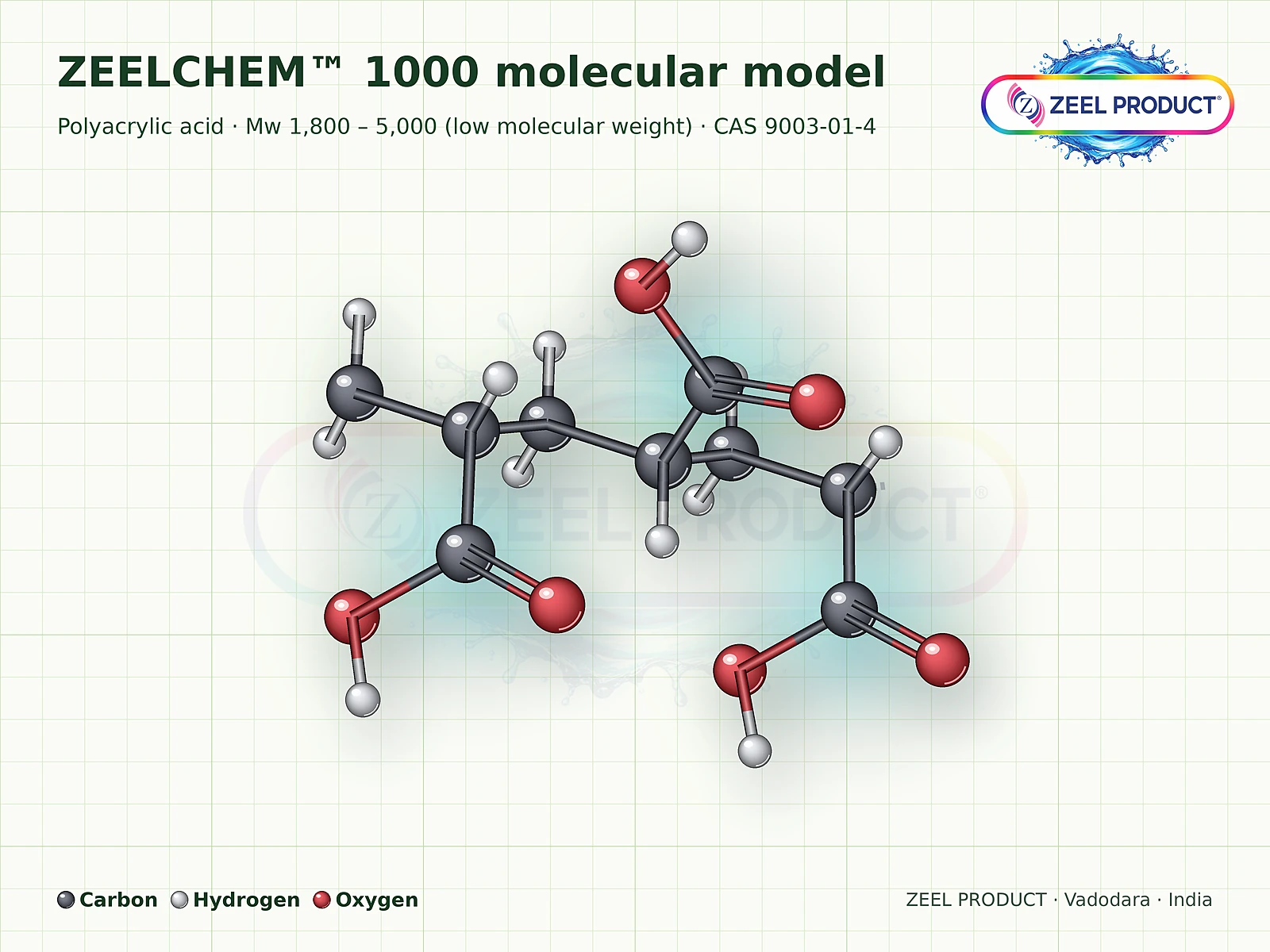
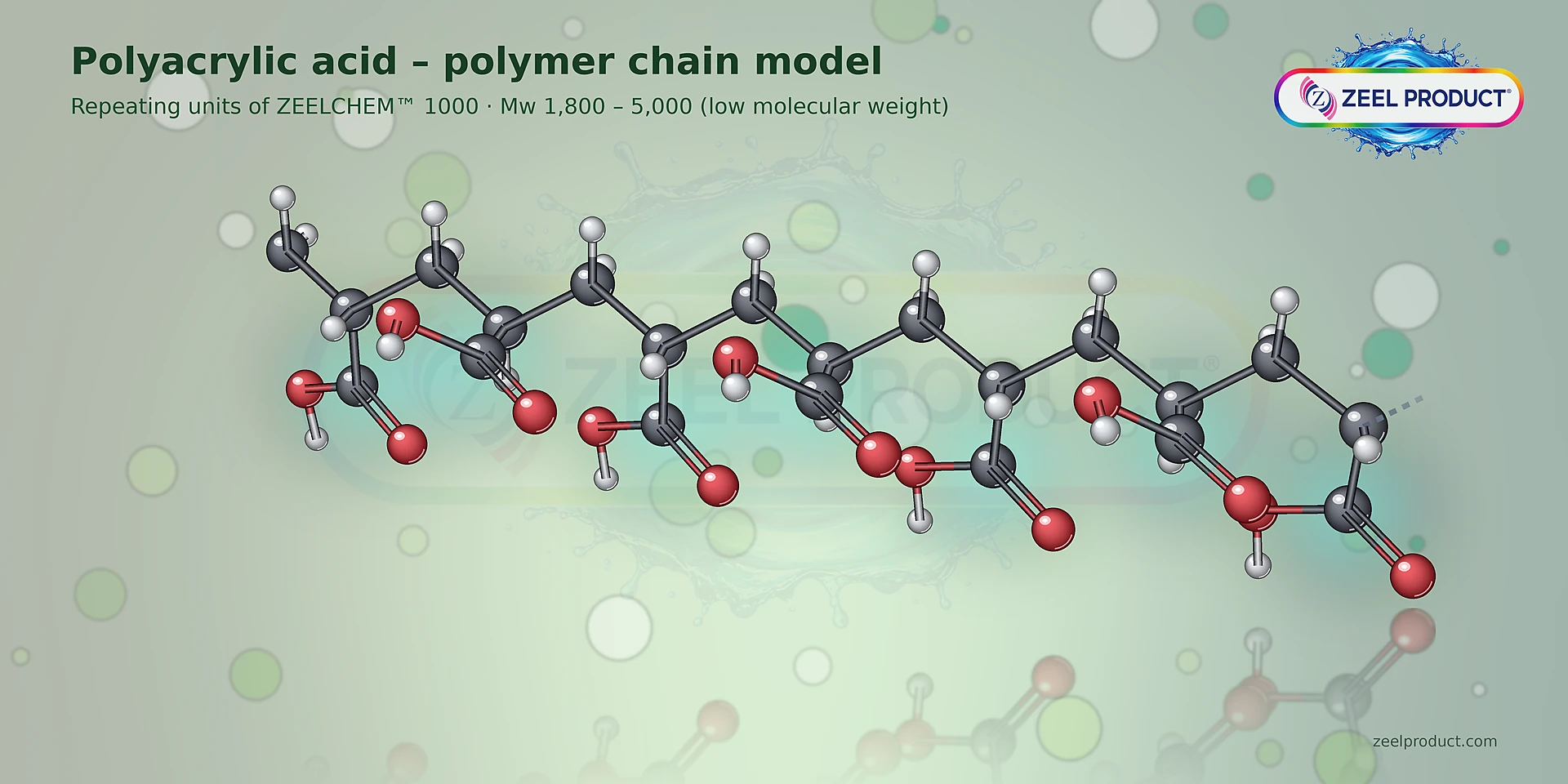
Polyacrylic Acid chemical structure – 3D models
3D ball-and-stick models of the PAA repeat unit and polymer chain ((C₃H₄O₂)ₙ). Carbon is grey, oxygen red, hydrogen white. Click any image to open it at full size.
How PAA works: mechanism of action
ZEELCHEM™ 1000 works by three mechanisms that act together:
- Threshold inhibition. Polymer anions adsorb on growing CaCO₃ nuclei at sub-stoichiometric doses (well below the amount needed to chelate the calcium). This delays crystal growth so the water can hold more scale-forming salt than its saturation limit.
- Crystal modification. Adsorbed polymer distorts the crystal lattice. Hard, adherent calcite turns into soft, irregular crystals that are swept away by flow instead of building a hard scale layer.
- Dispersion. Carboxylate groups add negative charge to particles of clay, silt, iron oxide and precipitated salts. Electrostatic repulsion keeps them suspended so they leave with blowdown instead of settling as sludge.
Relative performance profile
Relative index based on typical laboratory static-jar results and field experience, for comparison within the ZEELCHEM™ range. It is not an absolute guarantee of performance.
Applications of Polyacrylic Acid
Open recirculating cooling towers
CaCO₃ scale control and dispersion at 2–8 cycles of concentration; base polymer for phosphonate/zinc programs.
Low and medium pressure boilers
Sludge conditioner and dispersant in internal treatment; keeps precipitated hardness fluid for blowdown.
RO / NF membrane antiscalant formulations
Polymer component that controls CaCO₃ and disperses colloids in blended antiscalants.
Detergents and cleaners
Anti-redeposition and scale control agent (usually neutralised in situ).
Textile processing
Sequestering and dispersing aid in scouring, bleaching and dyeing baths.
Mining and mineral slurries
Low-cost dispersant for grinding and slurry transport.
Recommended dosage
| Application | Typical dosage |
|---|---|
| Cooling tower (continuous) | 5 – 15 mg/L as product in recirculating water |
| Cooling tower in phosphonate blend | 20 – 40 % of the blend (blend dosed at 30 – 100 mg/L) |
| Boiler internal treatment | 2 – 10 mg/L in feed water |
| RO antiscalant formulation | 10 – 30 % of formulation |
| Industrial cleaning/detergent | 0.5 – 3 % of formulation |
Calculate the daily product requirement for your cooling tower or process flow with our free dosage calculator. Final dosage should be set from a water analysis and monitored through residual polymer, hardness and cycles of concentration.
Key benefits
- Excellent calcium carbonate threshold inhibition at low dose
- Strong dispersion of mud, silt and corrosion products
- Fully compatible with phosphonates, zinc, molybdate and azoles
- Non-toxic polymer with no phosphorus, supports low-P discharge
- Easy to blend; clear, low colour solution
- Cost-effective base polymer for formulators
Formulation & synergy
ZEELCHEM™ 1000 is fully compatible with the other ZEELCHEM™ polymers and with phosphonates (HEDP, ATMP, PBTC), zinc salts, molybdate, azoles (BTA, TTA) and oxidising and non-oxidising biocides at use concentrations. Combining a polymer with a phosphonate usually gives a synergistic effect: the blend performs better than either component alone at the same total dose.
Related polymers: ZEELCHEM™ 3000 Co-polymer of MA/AA, ZEELCHEM™ 1000.S7 Sodium Polyacrylate Liquid, ZEELCHEM™ 200 Polymaleic Acid (HPMA). For phosphonates, biocides, corrosion inhibitors and ready RO antiscalants, see the ZEELCHEM™ product range and zeelproduct.net.
Storage, handling & safety
Storage: Store in original HDPE carboys or barrels in a cool, shaded, ventilated area between 5 °C and 40 °C. Keep containers closed. Avoid contact with mild steel, copper and aluminium when undiluted, because the acid form is corrosive to them. Use HDPE, PP, PVC or SS316 pumps and lines. Shelf life is 12 months from the date of manufacture in unopened containers.
Safety: Acidic (pH 2–3). Causes eye irritation and may irritate skin. Wear chemical goggles, nitrile/PVC gloves and an apron. On contact, rinse with plenty of water for 15 minutes. Refer to the ZEELCHEM™ 1000 MSDS for full GHS classification.
Packing
60 kg HDPE carboy and 240 kg HDPE barrel.
TDS, MSDS & COA
Every order of ZEELCHEM™ 1000 ships with a Technical Data Sheet (TDS), a GHS-compliant Material Safety Data Sheet (MSDS/SDS) and a batch Certificate of Analysis (COA), ready for vendor registration, ISO and EHS audits. To get the TDS and MSDS before ordering, send an enquiry or message us on WhatsApp.
Supply across India
ZEEL PRODUCT dispatches ZEELCHEM™ 1000 Polyacrylic Acid from Vadodara, Gujarat to Vadodara, Ahmedabad, Surat, Ankleshwar, Bharuch, Vapi, Rajkot, Morbi, Mumbai, Pune, Delhi NCR, Chennai, Hyderabad, Bengaluru, Kolkata, Indore and all over India. Gujarat orders usually reach within 1–3 days and other states within 3–7 days by road transport. See the pan-India supply network.
Frequently asked questions
What is ZEELCHEM™ 1000 used for?
It is a low molecular weight polyacrylic acid used as a scale inhibitor and dispersant, mainly for calcium carbonate scale in cooling towers, boilers, RO antiscalant formulations, detergents and textile processing.
What is the typical dosage of polyacrylic acid in a cooling tower?
Typically 5–15 mg/L as product in the recirculating water when used alone. In a blended program with phosphonates it usually makes up 20–40 % of the formulation.
Is polyacrylic acid the same as sodium polyacrylate?
No. ZEELCHEM™ 1000 is the acid form (pH 2–3). ZEELCHEM™ 1000.S7 is the neutralised sodium salt (pH 6–8), which is easier to handle and preferred where acidity is a problem.
Can PAA be mixed with HEDP or ATMP?
Yes. PAA is fully compatible with HEDP, ATMP, PBTC, zinc salts, molybdate and azoles. These blends are the base of most cooling water programs.
Do you supply polyacrylic acid across India?
Yes. ZEEL PRODUCT dispatches from Vadodara, Gujarat to every state in India by road transport, in 60 kg HDPE carboys and 240 kg HDPE barrels.