Why blend polymer and phosphonate?
Phosphonates such as HEDP, ATMP and PBTC are very strong threshold inhibitors for calcium carbonate. On their own they disperse poorly, and at high calcium they can precipitate as calcium phosphonate. Polymers like PAA disperse well, distort crystals and keep calcium phosphonate in solution. Together they outperform either component at the same total dose. This synergy is why almost all commercial cooling water products are blends.
Choosing components
| Component | Strength | Watch out for |
|---|---|---|
| HEDP | Low cost, strong CaCO₃ inhibitor, some corrosion inhibition | Degraded by high chlorine |
| ATMP | Good CaCO₃ inhibition, good iron sequestration | Less chlorine stable |
| PBTC | Best chlorine stability and calcium tolerance; low P | Higher price |
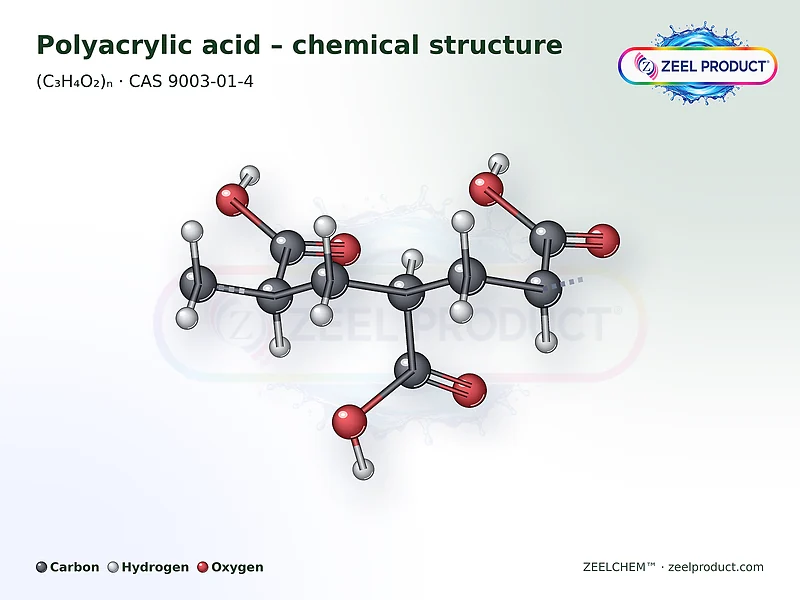
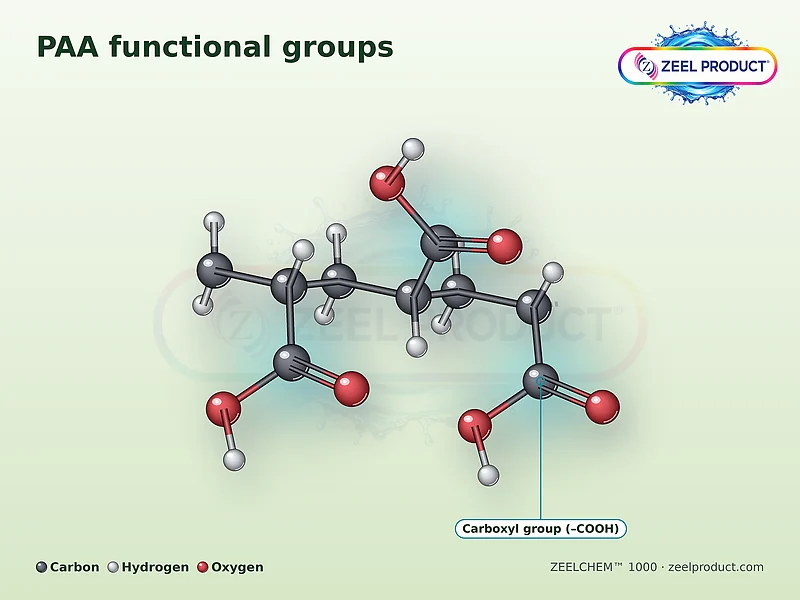
| PAA (ZEELCHEM™ 1000) | Dispersion, crystal distortion, cost-effective | Weak on calcium phosphate |
| AA/AMPS (ZEELCHEM™ 3100) | Phosphate, zinc and iron control | Higher cost per active |
Phosphonates, azoles, zinc salts and biocides are available from the ZEELCHEM™ product range and zeelproduct.net.
Starter formulations (% w/w as supplied)
| Use | Formula | Dose |
|---|---|---|
| General scale inhibitor | HEDP 60 % – 25; ZEELCHEM™ 1000 – 25; water – 50 | 40 – 80 mg/L |
| High-alkalinity, chlorinated | PBTC 50 % – 25; ZEELCHEM™ 3000 – 20; water – 55 | 40 – 80 mg/L |
| Scale + corrosion (multi-metal) | HEDP – 20; ZEELCHEM™ 1000 – 15; ZEELCHEM™ 3100 – 10; TTA – 2; water – 53 | 60 – 100 mg/L |
Important: These are starting points for laboratory evaluation, not finished products. Validate each blend with static jar tests (how to run one) and field monitoring.
Blending procedure and stability
- Charge water first, then add phosphonate with stirring.
- Add polymer slowly; the blend remains acidic and stable.
- Add azole last, pre-dissolved if it is a solid.
- Check pH, density and clarity, then store a retained sample for 30 days at 45 °C as a stability check.
Do not neutralise blends containing zinc without a stabilising polymer, because zinc hydroxide may precipitate. For zinc programs, see zinc stabilisation.
 FEATURED PRODUCT
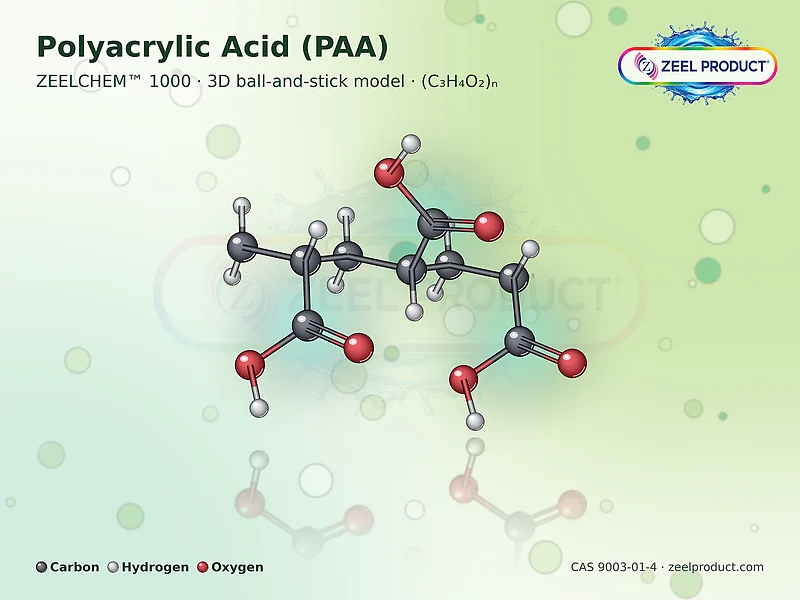
ZEELCHEM™ 1000 – Polyacrylic Acid
Low molecular weight polyacrylic acid for calcium carbonate scale inhibition and dispersion in cooling, boiler and RO water.
FAQ
What ratio of HEDP to PAA is best?
1:1 on an as-supplied basis is a common starting point; optimise by jar test for your water.
Can phosphonate–polymer blends be used in RO?
Yes, but RO antiscalants need different ratios and purity. See the AA/AMPS RO formulation guide.
Are these blends compatible with chlorine?
PBTC-based blends tolerate chlorine best. HEDP and ATMP slowly degrade above about 1 mg/L free chlorine.
More from ZEEL PRODUCT: zeelproduct.com · zeelproduct.net · ZEELCHEM™ range · online shop · zeelproductonline.co.in