Basics
What Is a Defoamer? Meaning, Types, Uses & How It Works
What is a defoamer? Learn the defoamer meaning, how antifoaming agents work, the main types (silicone and non-silicone), and where they are used in in…

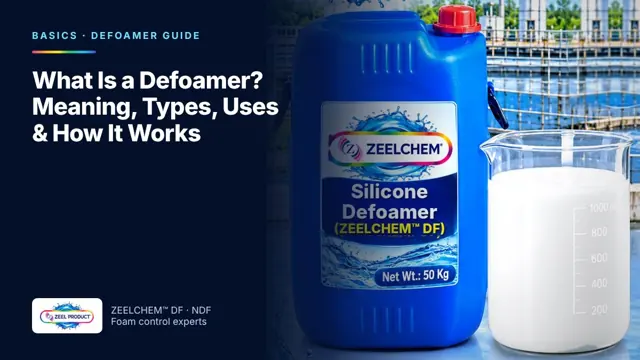
ZEELCHEM™ DF silicone defoamer and ZEELCHEM™ NDF non-silicone defoamer — high-performance antifoaming agents that knock foam down in seconds and keep it down, at low ppm dosage.
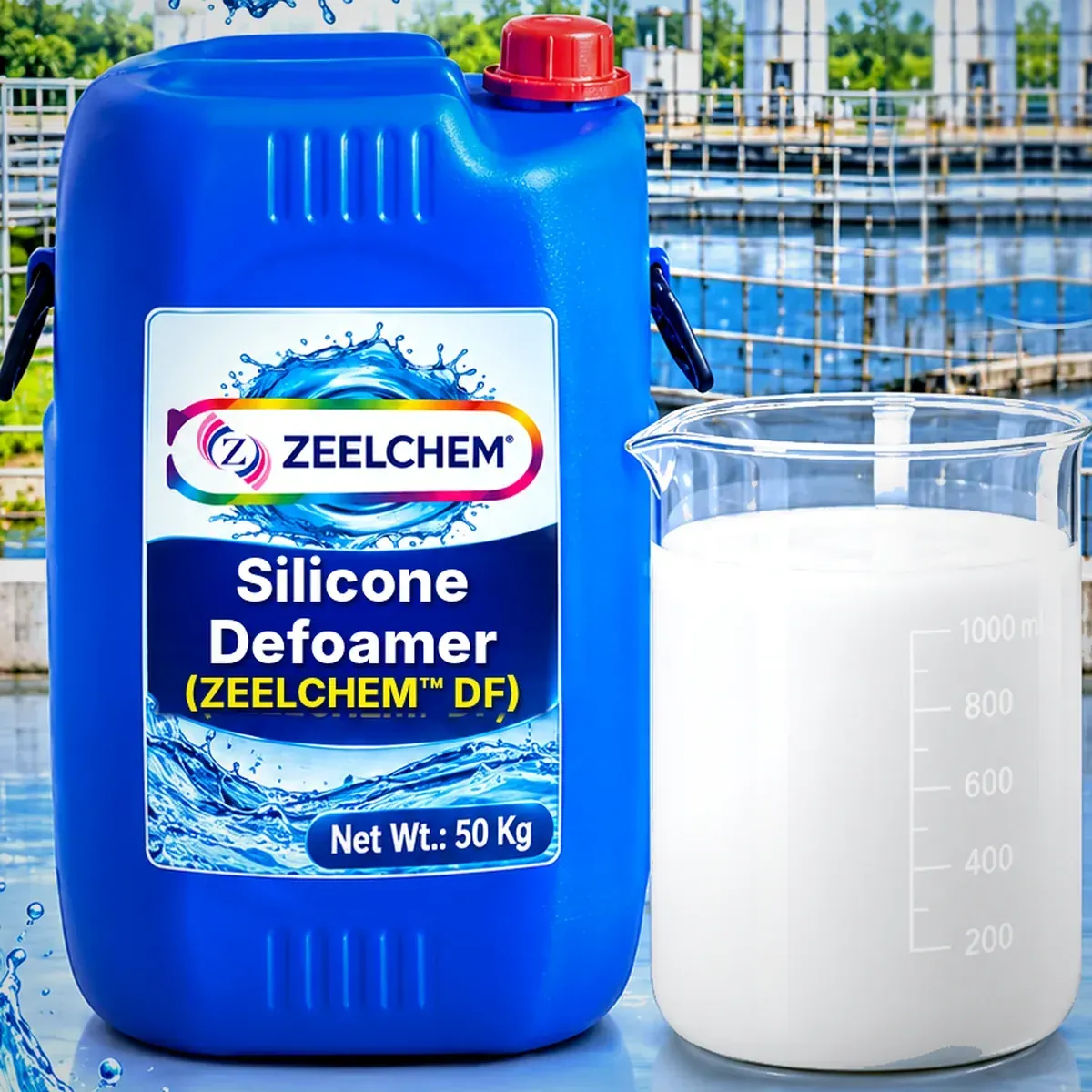
Choose silicone for maximum efficiency, or non-silicone where surface quality and silicone-free specifications matter.
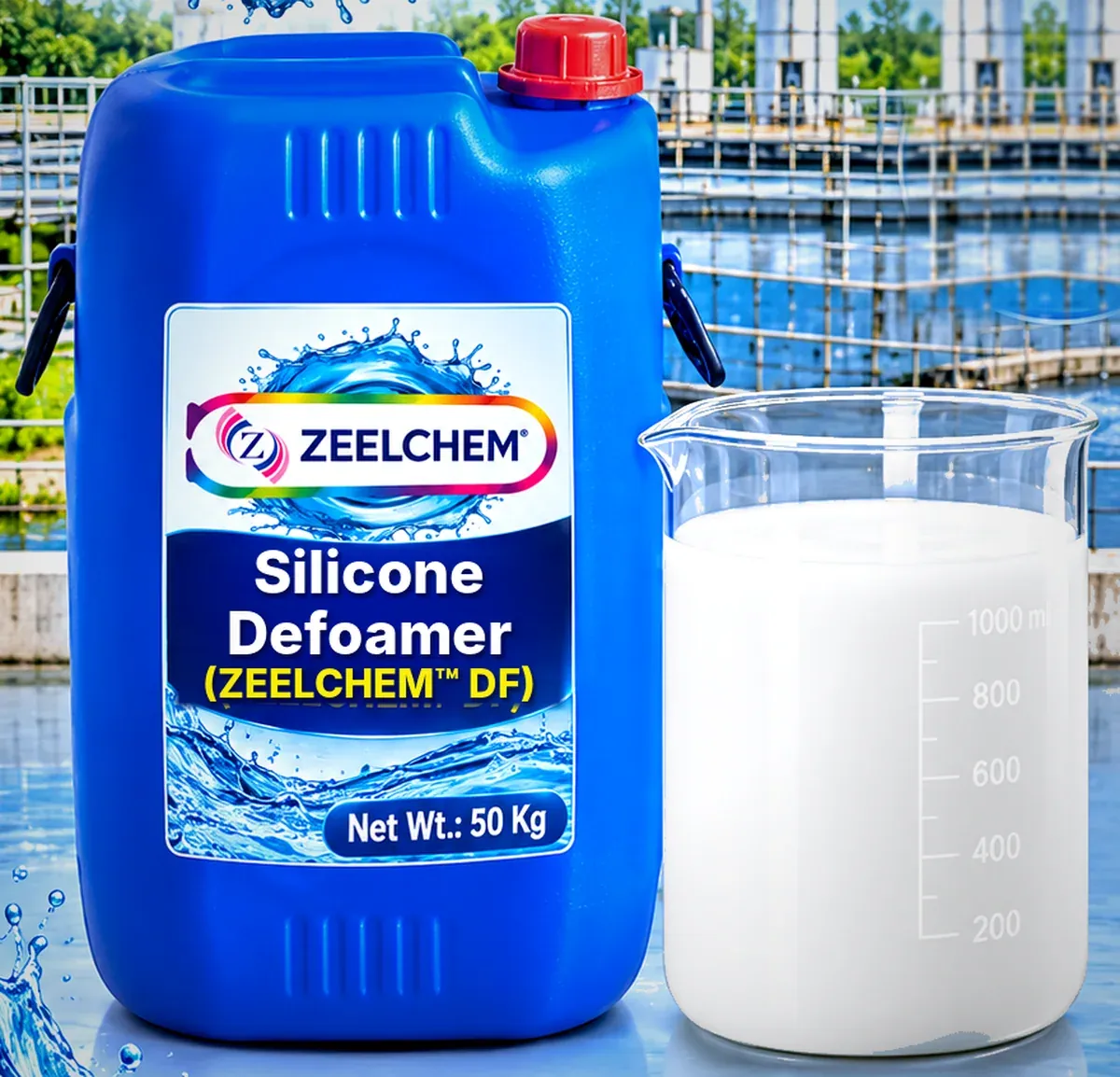 Silicone antifoam emulsion
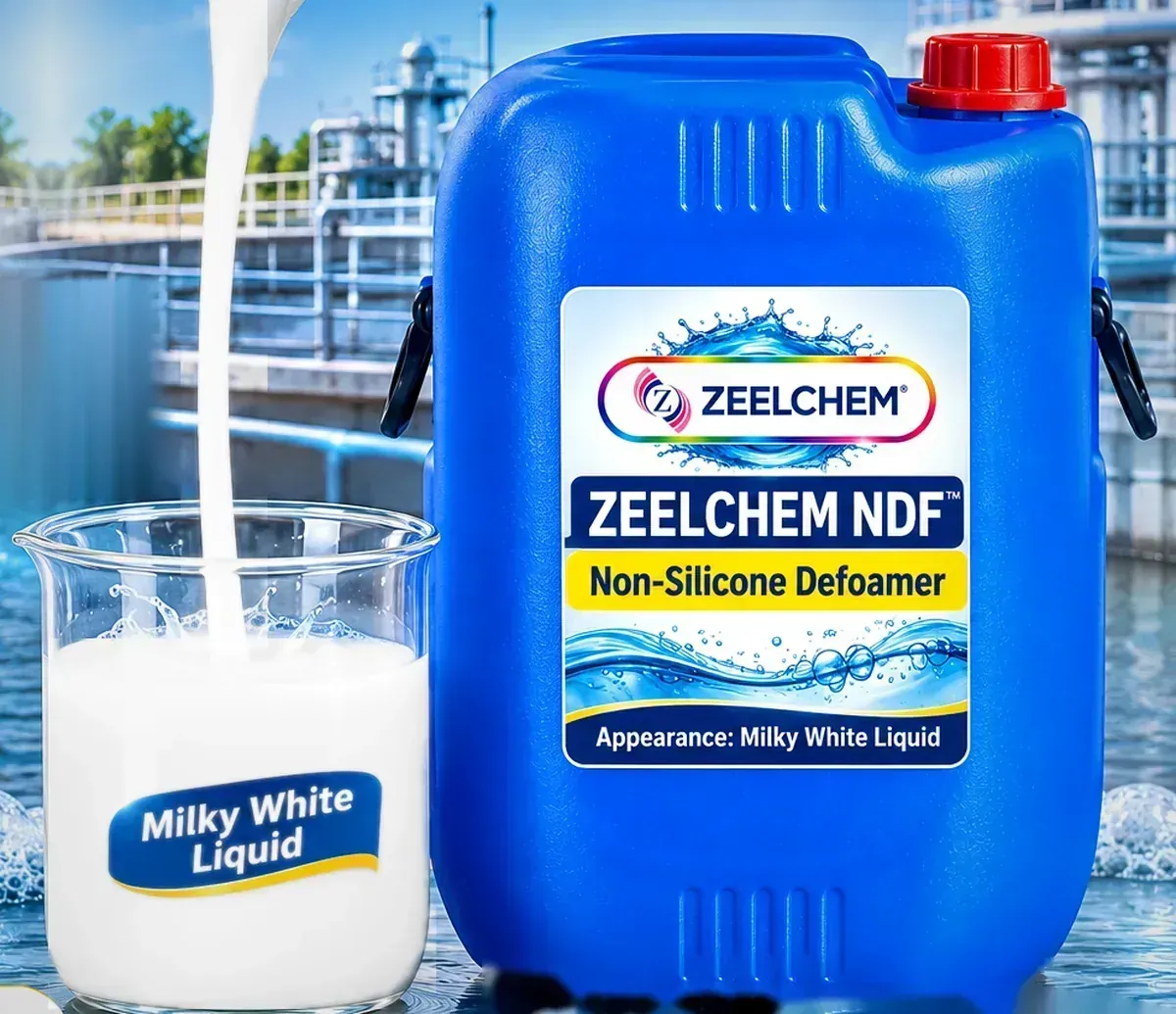 Silicone-free defoamer
From the thick, milky white emulsion to real ETP foam knockdown — watch it work.
A few drops of ZEELCHEM™ defoamer spread across the bubble walls, thin them and burst them — knocking foam down and keeping it down.
Illustrative animation of a cylinder foam test. Actual results depend on your system and dose.
A defoamer (antifoaming agent) is an insoluble, low-surface-tension additive that destroys foam and prevents it from re-forming. Its droplets enter bubble walls, spread, thin and bridge the film until the bubble bursts. The main types are silicone defoamers and non-silicone defoamers.
Also known as: antifoam, antifoaming agent, defoaming agent, foam control agent, foam breaker, foam killer, antifoam emulsion, silicone antifoam, silicone-free antifoam and deaerator (Hindi: फोम किलर / झाग नाशक · Gujarati: ફીણ નાશક).
Foam costs money: lost tank capacity, overflows, pump cavitation, pinholes in paint, spots on fabric and poor product quality. The right defoamer solves it at a dose of just a few ppm.
Read the full guide →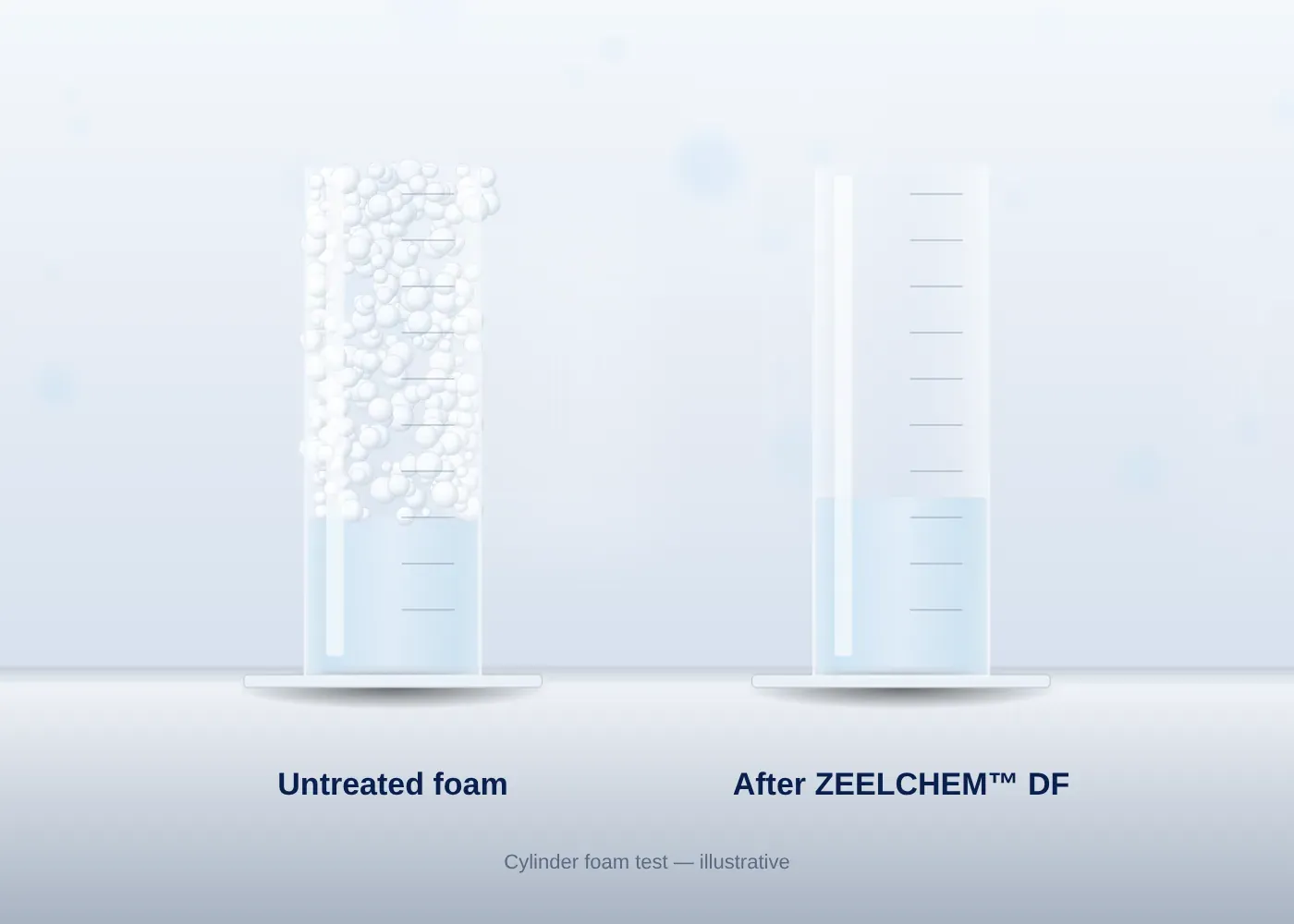
Four steps happen in a fraction of a second on every bubble.
An insoluble defoamer droplet with very low surface tension reaches the bubble film.
It breaks into the surface and spreads, dragging liquid away and thinning the wall.
Hydrophobic silica or oil bridges both faces of the thin film and de-wets it.
The film ruptures — foam collapses and the defoamer moves on to the next bubble.
Click an industry for the complete foam-control guide.
Aeration and equalisation tank foam, CETPs, sewage plants.
Jet dyeing, scouring, bleaching, washing and printing.
Emulsion paints, primers, putty — no craters or fish-eyes.
Brownstock washing, wet end, size press, coating.
Bioreactors, enzymes, yeast and antibiotic production.
Juice, evaporators, molasses fermentation, spent wash.
Manufacturing aid and low-foam formulations, CIP.
PCE admixtures, waterproofing, tile adhesive, gypsum.
SC, SL, EW, WG formulations and spray-tank mixing.
Potato, pulses, starch washing — food-grade on request.
Surfactant and organic-leak foam in cooling water.
Drilling fluids, amine units, inks, latex and adhesives.
| Property | ZEELCHEM™ DF — Silicone | ZEELCHEM™ NDF — Non-Silicone |
|---|---|---|
| Active base | Polydimethylsiloxane + hydrophobic silica (emulsion) | Mineral oil / fatty alcohol / polyether (EO/PO) based |
| Efficiency per ppm | Very high | High |
| Knockdown & persistence | Very fast, long lasting | Fast, good persistence |
| Temperature & pH range | Wide | Grade-dependent |
| Surface-defect risk (craters, fish-eyes) | Use with care in coatings | Low — ideal for coatings |
| Best for | ETP/STP, textiles, detergents, chemicals, distilleries, agro | Paints, paper machines, adhesives, inks, construction chemicals |
| Packing | 50 kg carboy · 200 kg drum · IBC | 50 kg carboy · 200 kg drum · IBC |
From our Vadodara, Gujarat unit to industrial clusters in every state.
Manufactured under ISO 9001:2015, ISO 14001:2015 and ISO 22000:2018 systems.
Tell us your process — we recommend the best grade and starting dose.
Complete documentation with every batch for audits and compliance.
Concentrated grades that work at low ppm reduce your cost per m³.
From Vadodara, Gujarat to plants across India, in carboys, drums and IBCs.
On-call help for dosing points, dilution and troubleshooting.
What is a defoamer? Learn the defoamer meaning, how antifoaming agents work, the main types (silicone and non-silicone), and where they are used in in…
Silicone vs non-silicone defoamer compared on efficiency, dosage, temperature, pH, surface defects, cost-in-use and best applications — with a quick s…
How to choose and dose a defoamer for wastewater treatment — ETP, STP, CETP and aeration tank foam control — with dosing points and tips that protect …
Textile defoamer guide for jet dyeing, soft-flow machines, scouring, bleaching, washing and printing — properties needed, dosage and how to avoid sili…
How to choose a defoamer for water-based paints and coatings — macro-foam vs micro-foam, avoiding craters and fish-eyes, where to add it and why non-s…
Defoamer dosage guide — typical ppm ranges for silicone and non-silicone defoamers, how to calculate dose from flow rate, dilution tips and how to opt…
A defoamer, or antifoaming agent, is a chemical added in small amounts to break existing foam and prevent new foam in industrial liquids. ZEEL PRODUCT makes ZEELCHEM™ DF (silicone) and ZEELCHEM™ NDF (non-silicone) defoamers.
Silicone defoamers are based on PDMS silicone and are extremely efficient across wide temperature and pH ranges. Non-silicone defoamers use oils, fatty alcohols or polyethers and avoid silicone-related surface defects in paints, inks, adhesives and paper.
A silicone emulsion defoamer such as ZEELCHEM™ DF is the usual first choice for ETP, STP and aeration-tank foam because it works at low dosage.
Non-silicone defoamers such as ZEELCHEM™ NDF are preferred in water-based paints and primers to avoid craters and recoat problems.
Typical silicone emulsion doses are around 10–200 ppm and non-silicone doses about 0.05–0.5%, but the right dose must be confirmed by trial.
Yes. Share your application, process conditions and current dose — our team will recommend the right ZEELCHEM™ grade and starting dosage.
ZEELCHEM™ DF and NDF are supplied in 50 kg HDPE carboys and 200 kg drums, with 1,000 kg IBC on request.
We are in Vadodara, Gujarat and dispatch defoamers across India. Call +91 97245 93964 or +91 97238 59512.
Share your process details — our technical team will recommend the right ZEELCHEM™ grade and starting dose, with price.
*Typical starting range; the correct dose depends on your process and must be confirmed by trial.