 By ZEELCHEM Technical Team · ZEEL PRODUCT, Vadodara
Published · Updated · 3 min read
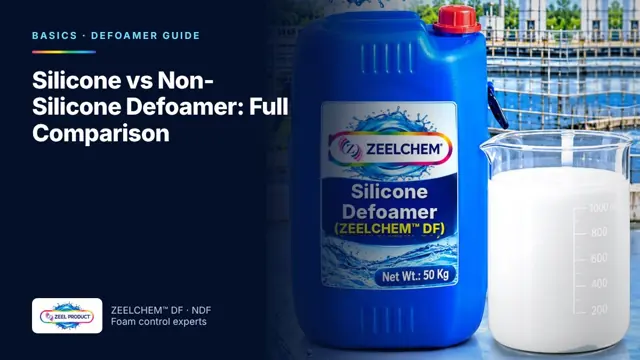
Silicone defoamers (like ZEELCHEM™ DF) are usually stronger per ppm, faster and more temperature- and pH-tolerant. Non-silicone defoamers (like ZEELCHEM™ NDF) avoid silicone-related defects such as craters and recoat problems, so they are preferred in paints, coatings, inks, adhesives and some paper processes. Pick silicone for maximum foam control in water treatment, textiles and chemicals; pick non-silicone wherever surface quality or silicone-free specifications matter.
Side-by-side comparison
| Factor | Silicone defoamer (DF) | Non-silicone defoamer (NDF) |
|---|---|---|
| Active | PDMS + hydrophobic silica | Mineral/vegetable oil, fatty alcohol, ester, polyether |
| Efficiency per ppm | Very high | Moderate to high |
| Knockdown speed | Very fast | Fast |
| Persistence | Long | Good (depends on type) |
| Temperature range | Wide | Type-dependent; polyethers excel in hot systems |
| pH range | Wide | Type-dependent |
| Risk of craters/fish-eyes | Higher if overdosed or incompatible | Low |
| Recoat / printing / adhesion | Can interfere | Generally no interference |
| Typical sectors | ETP/STP, textiles, detergents, chemicals, fermentation | Paints, coatings, inks, adhesives, paper, construction |
Cost-in-use, not price per kg
A silicone emulsion can cost more per kilogram but be used at a fraction of the dose, so its cost per tonne of treated liquid can be lower. Always compare cost per day or cost per cubic metre treated, not the drum price. See what affects defoamer price.
Quick decision rules
- Water-based process with no coating or printing step afterwards → start with ZEELCHEM™ DF.
- Paint, ink, adhesive, coating, or "silicone-free" customer spec → start with ZEELCHEM™ NDF.
- Hot process with foam that appears above a certain temperature → consider a polyether NDF grade.
- Unsure → share your process details and our team will recommend a grade.
Frequently asked questions
Which is stronger, silicone or non-silicone defoamer?
Silicone defoamers are generally stronger per ppm, but the best product is the one that controls foam in your system without side effects.
Why avoid silicone in paint?
Silicone can lower surface tension locally and cause craters, fish-eyes and poor recoat adhesion in some coatings.
Can I switch from silicone to non-silicone defoamer?
Yes, but run a trial first; the non-silicone dose is usually higher and must be optimised.
Key takeaways
- Silicone = strongest, widest range; non-silicone = defect-free surfaces.
- Compare cost-in-use, not price per kg.
- Use our rules of thumb, then confirm with a test.
- Product page: ZEELCHEM silicone defoamer product details (zeelproduct.com).
- Also see silicone defoamer for industrial use on zeelproductonline.co.in.
- For silicone-sensitive processes: non-silicone defoamer online (zeelproductonline.co.in).