 By ZEELCHEM Technical Team · ZEEL PRODUCT, Vadodara
Published · Updated · 3 min read
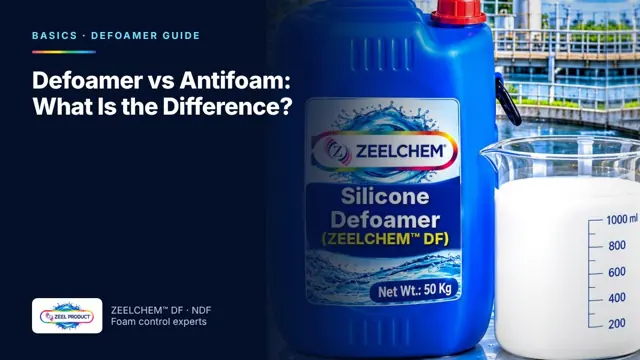
A defoamer is added to knock down foam that already exists; an antifoam is added beforehand to stop foam from forming. Chemically they are often the same type of product — the difference is mostly about when and where it is dosed. Many modern foam control agents, such as ZEELCHEM™ DF and ZEELCHEM™ NDF, act as both.
Definitions
| Defoamer | Antifoam | |
|---|---|---|
| Purpose | Destroys existing foam (knockdown) | Prevents foam formation (persistence) |
| When added | After foam appears; often sprayed on the foam surface | Before or during the foaming step, into the liquid |
| Key property | Fast spreading, quick knockdown | Long-lasting presence in the liquid |
| Typical example | Spray on aeration-tank foam | Added to a fermenter at the start of a batch |
Why the terms are mixed up
A well-formulated silicone or non-silicone product has both fast knockdown and long persistence. So suppliers, buyers and search engines treat "defoamer", "antifoam", "antifoaming agent", "defoaming agent" and "foam control agent" as the same thing. When you search for an antifoaming agent manufacturer or a defoamer supplier, you are usually looking for the same products.
Knockdown vs persistence — what matters for you
- Batch processes (dyeing, fermentation, reactors): persistence matters — the foam keeps regenerating.
- Sudden foam events (ETP aeration upsets, tank filling): knockdown matters — you need foam gone in seconds.
- Coatings and inks: you also need micro-foam and entrained air release without surface defects.
How to test which you need
Run a simple shake or sparge test. Note how fast the foam collapses (knockdown) and whether it comes back after repeated shaking or continued air flow (persistence). Our defoamer testing guide describes the methods.
Frequently asked questions
Can one product be both a defoamer and an antifoam?
Yes. Most commercial silicone emulsion defoamers and many non-silicone defoamers give both quick knockdown and lasting foam suppression.
Which is better, antifoam or defoamer?
Neither is better in general. Choose based on your process: continuous or regenerating foam needs persistence; sudden foam needs knockdown.
Is antifoam silicone?
Many antifoams are silicone-based, but non-silicone antifoams based on polyethers, oils and fatty alcohols are also common.
Key takeaways
- Defoamer = knockdown of existing foam; antifoam = prevention.
- Most products do both — test for knockdown and persistence.
- Dosing point and timing matter as much as the chemistry.
- Product page: silicone defoamer for industrial use (zeelproduct.com).
- Also see ZEELCHEM silicone defoamer product details on zeelproductonline.co.in.
- For silicone-sensitive processes: silicone-free defoamer for paints and paper (zeelproductonline.co.in).