 By ZEELCHEM Technical Team · ZEEL PRODUCT, Vadodara
Published · Updated · 3 min read
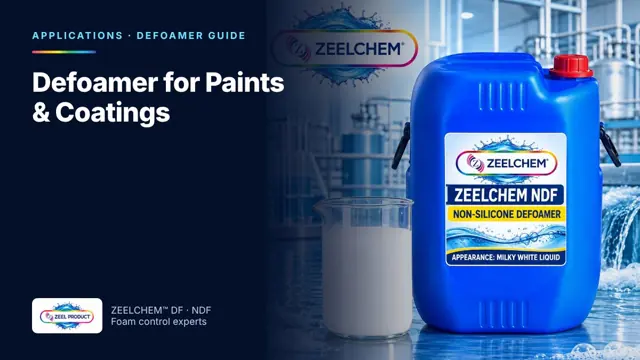
Water-based paints need a defoamer during grinding (dispersion), let-down and application. Mineral-oil and other non-silicone defoamers such as ZEELCHEM™ NDF are widely used in emulsion paints, primers and putty because they control foam without causing craters, fish-eyes or recoat problems. Split the dose between the grind and let-down stages and always check film appearance.
Two kinds of foam in paint
- Macro-foam — visible bubbles during manufacturing and filling.
- Micro-foam — tiny trapped bubbles that cause pinholes and loss of gloss in the dry film, especially when applied by roller or spray.
Where to add defoamer in paint making
| Stage | Purpose |
|---|---|
| Grind / dispersion | Control foam from high-speed disperser and wetting agents |
| Let-down | Control foam from latex binder and thickeners |
| Before filling | Release entrained air for correct fill weight |
Avoiding defects
A defoamer that is too strong or incompatible causes craters, fish-eyes and orange peel; one that is too weak leaves pinholes. Test drawdowns on different substrates, with brush and roller application, and check again after storage, because some defoamers lose efficiency over time in the can.
Silicone or non-silicone in paint?
Non-silicone defoamers are the safe starting point for emulsion paints, primers, wall putty and textured coatings. Specially modified silicone defoamers are used in some high-performance coatings, but must be tested carefully for recoat adhesion.
Frequently asked questions
What defoamer is used in emulsion paint?
Mineral-oil or other non-silicone defoamers are most common in emulsion paints because they avoid craters and recoat problems.
Why does my paint have craters?
Often an incompatible or overdosed defoamer, contamination, or a large surface-tension difference between paint and substrate.
When should defoamer be added to paint?
Usually split between the grind stage and the let-down stage.
Key takeaways
- Control both macro-foam and micro-foam.
- Split dose between grind and let-down.
- Non-silicone is the safe start for emulsion paints.
- Explore our buy non-silicone defoamer in India on zeelproductonline.co.in.
- Need maximum foam knockdown instead? See this ZEELCHEM silicone defoamer product details page on zeelproduct.com.