 By ZEELCHEM Technical Team · ZEEL PRODUCT, Vadodara
Published · Updated · 3 min read
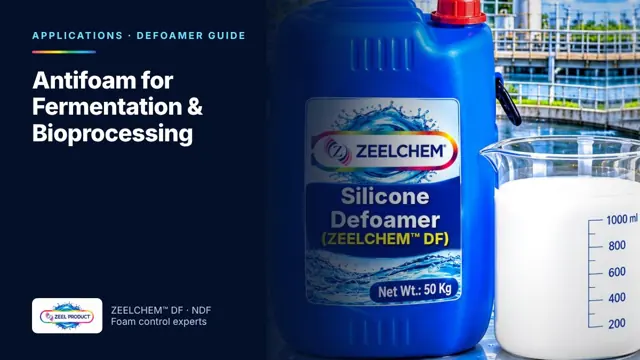
Fermenters foam because aeration and agitation act on proteins and other surface-active broth components. The two common antifoam types are silicone emulsions and polyether (EO/PO polyglycol) antifoams. Antifoam is usually added at the start and then dosed automatically by a foam probe. Use the minimum effective dose, because excess antifoam can lower oxygen transfer and complicate downstream processing.
Why fermenters foam
- Proteins, peptides and cell debris in the broth.
- High aeration and agitation rates.
- CO2 evolution during active growth.
- Changes in viscosity and surfactant level as the batch progresses.
Silicone vs polyether antifoam
| Silicone emulsion | Polyether / polyglycol | |
|---|---|---|
| Strength | Very high at low dose | Good; relies on cloud point |
| Behaviour | Fast knockdown | Soluble cold, active warm |
| Downstream | Can foul membranes if overdosed | Generally easier to remove |
| Typical use | Industrial fermentation, distilleries | Bioprocessing, antibiotics, enzymes |
Dosing strategy
- Add a base charge with the medium (often sterilised together, if the grade allows).
- Use a foam probe linked to a dosing pump for on-demand additions.
- Track total antifoam used per batch — rising use is an early sign of process change.
For high-purity, food or pharmaceutical uses, only use grades with suitable regulatory documentation. Talk to us about the right ZEELCHEM™ grade for your process.
Frequently asked questions
What antifoam is used in fermentation?
Silicone emulsions and polyether (EO/PO, polypropylene glycol) antifoams are the most common.
Does antifoam affect oxygen transfer?
Yes, excess antifoam can reduce the oxygen transfer rate, so use the minimum effective dose.
Can antifoam be autoclaved?
Many silicone and polyether antifoams can be sterilised, but check the product data sheet for heat stability.
Key takeaways
- Fermentation foam comes from proteins, aeration and CO₂.
- Silicone or polyether — test both.
- Use probe-controlled dosing and the minimum dose.
- Product page: silicone defoamer for ETP and textile (zeelproductonline.co.in).
- Also see buy silicone defoamer online in India on zeelproduct.net.
- For silicone-sensitive processes: non-silicone antifoam supplier (zeelproductonline.co.in).