 By ZEELCHEM Technical Team · ZEEL PRODUCT, Vadodara
Published · Updated · 3 min read
Quick answer
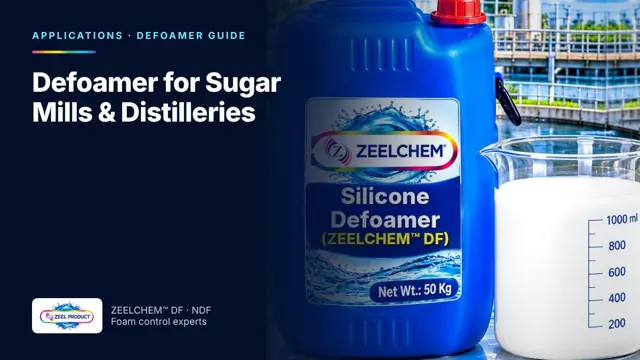
Sugar mills and distilleries face heavy foam in juice heating and clarification, evaporators, molasses fermentation and spent-wash (vinasse) treatment. Silicone emulsion defoamers like ZEELCHEM™ DF are widely used for fermentation and spent-wash foam, while polyether or oil-based types can be used in hot juice and evaporator stages. Dose before the foaming point and adjust with molasses quality.
Foam hotspots
| Stage | Foam cause |
|---|---|
| Juice heating & clarification | Proteins, saponins, air |
| Evaporators & pans | Boiling, impurities |
| Molasses fermentation (ethanol) | CO2 evolution, proteins |
| Spent wash / biomethanation | Organic load, biogas |
| Distillery ETP | Aeration |
Selection tips
- Fermentation: choose a defoamer that does not inhibit yeast; test in a lab fermentation first.
- Spent wash: silicone emulsion with good persistence at high organic load.
- Hot stages: products stable at process temperature.
- Season start: molasses quality changes — be ready to adjust dose.
Frequently asked questions
Which defoamer is used in distillery fermentation?
Silicone emulsion and polyether defoamers are commonly used; they should be tested to confirm no effect on yeast.
Why does molasses foam during fermentation?
CO₂ produced by yeast is trapped by proteins and colloids in molasses.
Can defoamer be used in biomethanation of spent wash?
Yes, suitable defoamers are used to control digester foam; dose carefully to avoid affecting methane-producing bacteria.
Key takeaways
- Foam hits juice, evaporators, fermentation and spent wash.
- Test for yeast compatibility.
- Adjust dose with molasses quality.
More from ZEEL PRODUCT
- Product page: silicone defoamer for industrial use (zeelproduct.com).
- Also see ZEELCHEM silicone defoamer product details on zeelproductonline.co.in.
- For silicone-sensitive processes: silicone-free defoamer for paints and paper (zeelproductonline.co.in).
Related searches: defoamer for sugar industrydistillery antifoamantifoam for molasses fermentationspent wash defoamerdefoamer for ethanol plant