 By ZEELCHEM Technical Team · ZEEL PRODUCT, Vadodara
Published · Updated · 3 min read
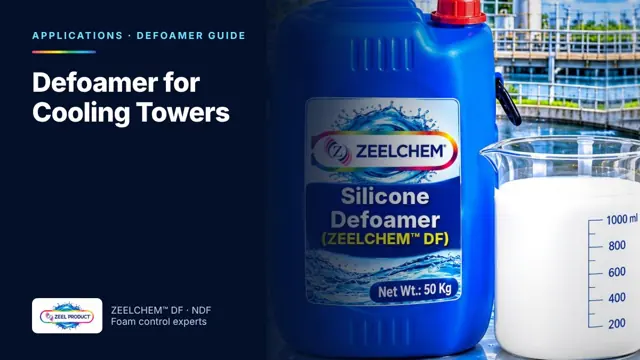
Cooling-tower foam usually comes from biocide or dispersant surfactants, organic contamination, process leaks or high cycles of concentration. A water-dilutable antifoam (silicone emulsion or polyether) dosed into the basin controls it quickly. Because foam is often a symptom, also check for process leaks, biological growth and over-dosed treatment chemicals.
Common causes
- Non-oxidising biocides and bio-dispersants containing surfactants.
- Organic leaks from heat exchangers (oils, sugars, solvents).
- Biofilm and microbial growth.
- High cycles of concentration and suspended solids.
How to control it
- Dose a diluted antifoam into the cold-water basin or near the pump suction.
- Use a compatible product that does not interfere with scale and corrosion inhibitors.
- Keep the dose low and steady — follow the water treatment programme.
- Investigate and fix the root cause (leak, overdosing, biology).
Foam that appears right after a biocide shot is normal and short-lived; persistent foam needs investigation.
Frequently asked questions
Why is my cooling tower foaming?
Common reasons are surfactants in biocides, organic leaks, microbial growth and high solids from high cycles of concentration.
Where is antifoam added in a cooling tower?
Usually into the cold-water basin or close to the recirculating pump suction.
Can antifoam affect cooling water treatment?
Choose a compatible antifoam and use a low dose so it does not interfere with inhibitors or biocides.
Key takeaways
- Foam is often a symptom — find the cause.
- Dose diluted antifoam into the basin.
- Check compatibility with the treatment programme.
- Product page: silicone defoamer for ETP and textile (zeelproductonline.co.in).
- Also see buy silicone defoamer online in India on zeelproduct.net.
- For silicone-sensitive processes: silicone-free defoamer for paints and paper (zeelproductonline.co.in).