 By ZEELCHEM Technical Team · ZEEL PRODUCT, Vadodara
Published · Updated · 3 min read
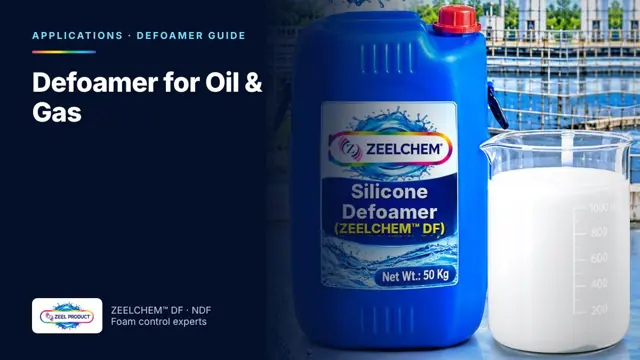
Oil and gas operations use defoamers in water-based drilling muds and cement slurries, amine gas-sweetening units, glycol dehydration and crude-oil separators. Water-based systems use silicone emulsions or polyethers; amine units often use silicone or polyglycol antifoams at low dose; crude-oil separators use oil-soluble silicone or fluorosilicone grades.
Applications
| System | Problem | Typical antifoam |
|---|---|---|
| Water-based drilling mud | Entrained air, wrong mud weight | Silicone emulsion, polyether, alcohol-based |
| Cement slurry | Air lowers density | Defoamer for cement |
| Amine sweetening | Foam causes carry-over and loss of capacity | Silicone or polyglycol, low dose |
| Glycol dehydration | Glycol losses | Silicone or polyglycol |
| Crude separators | Liquid carry-over in gas | Oil-soluble silicone |
In amine units, antifoam treats the symptom; contamination (hydrocarbons, solids, degradation products) is usually the root cause and should be addressed with filtration and good unit operation.
Frequently asked questions
Why do amine units foam?
Mostly due to contaminants such as liquid hydrocarbons, solids, degradation products and some corrosion inhibitors.
What defoamer is used in drilling mud?
Silicone emulsions, polyethers and alcohol-based defoamers are used in water-based muds.
Is silicone used in crude oil separators?
Yes, oil-soluble silicone antifoams are widely used in crude separators.
Key takeaways
- Water-based muds, amine units and separators all need foam control.
- Match solubility: water systems vs oil systems.
- In amine units, fix contamination too.
- Product page: silicone defoamer manufacturer in Vadodara (zeelproduct.net).
- Also see silicone antifoam emulsion supplier on zeelproduct.com.
- For silicone-sensitive processes: buy non-silicone defoamer in India (zeelproductonline.co.in).