 By ZEELCHEM Technical Team · ZEEL PRODUCT, Vadodara
Published · Updated · 3 min read
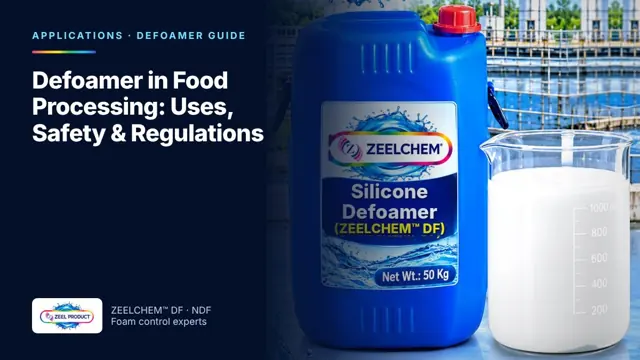
Food processors use defoamers when washing, blanching and boiling potatoes, pulses, starch and vegetables, in sugar and juice processing, and in fermentation. Only food-grade defoamers that comply with the applicable food regulations should be used — for example dimethylpolysiloxane (E900) where permitted, used within the limits set by the local food authority. Industrial defoamers are not suitable for food contact.
Common food applications
- Potato and vegetable washing, peeling and blanching.
- Pulses and legume soaking and cooking.
- Starch and sugar processing.
- Fruit juice and beverage processing.
- Yeast and fermentation-based products.
- Food-factory effluent treatment (industrial grade is acceptable here, as it is not food contact).
Regulatory points
Food-grade antifoaming agents are regulated by national food safety authorities (in India, FSSAI; internationally references include Codex Alimentarius and, in the US, FDA 21 CFR). Permitted substances and maximum levels vary by food and country, so manufacturers should check the current regulation for each product and keep supplier documentation such as a certificate of analysis and food-grade declaration.
Good practice
- Use separate, labelled storage for food-grade defoamer.
- Keep dosing equipment clean and dedicated.
- Record batch numbers for traceability.
Frequently asked questions
Is silicone antifoam safe in food?
Dimethylpolysiloxane (E900) is a permitted antifoaming agent in many foods within set limits, but always confirm the regulation for your product and country.
Can I use industrial defoamer in food?
No. Only food-grade defoamers with appropriate documentation should be used for food contact.
What is E900?
E900 is the food additive number for dimethylpolysiloxane, used as an antifoaming agent.
Key takeaways
- Only food-grade defoamers for food contact.
- Check FSSAI/Codex limits for each product.
- Keep documentation and traceability.
- Product page: silicone defoamer manufacturer in Vadodara (zeelproduct.net).
- Also see silicone antifoam emulsion supplier on zeelproduct.com.
- For silicone-sensitive processes: non-silicone defoamer online (zeelproductonline.co.in).