Sources
- Borewell and river make-up: dissolved Fe²⁺/Mn²⁺ oxidise in the tower and precipitate.
- System corrosion: mild-steel pipework and exchangers release iron oxides.
- Process leaks and poor pre-treatment (clarifier carry-over).
Why it matters
Iron oxide deposits insulate tubes, create under-deposit corrosion cells and provide a home for iron bacteria and SRB. Iron also deactivates many phosphonates and some polymers by adsorbing them, which raises chemical demand.
Dispersant performance
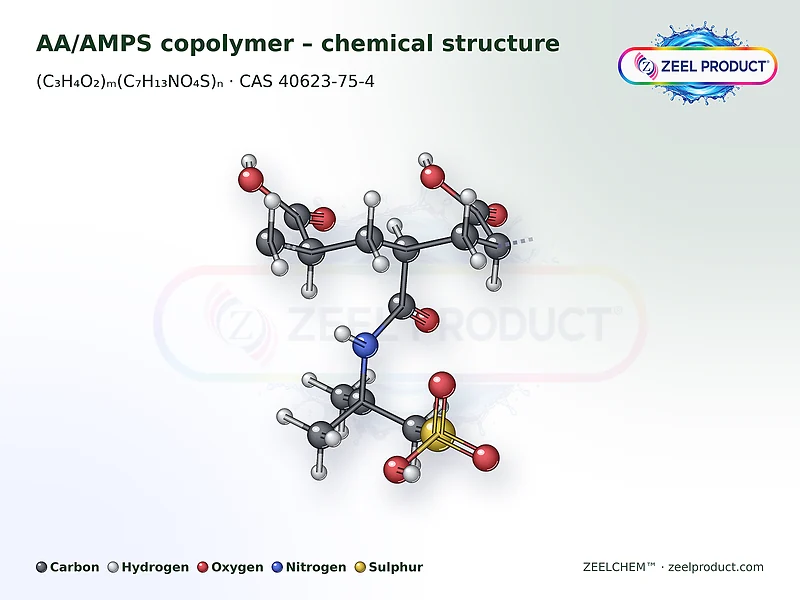
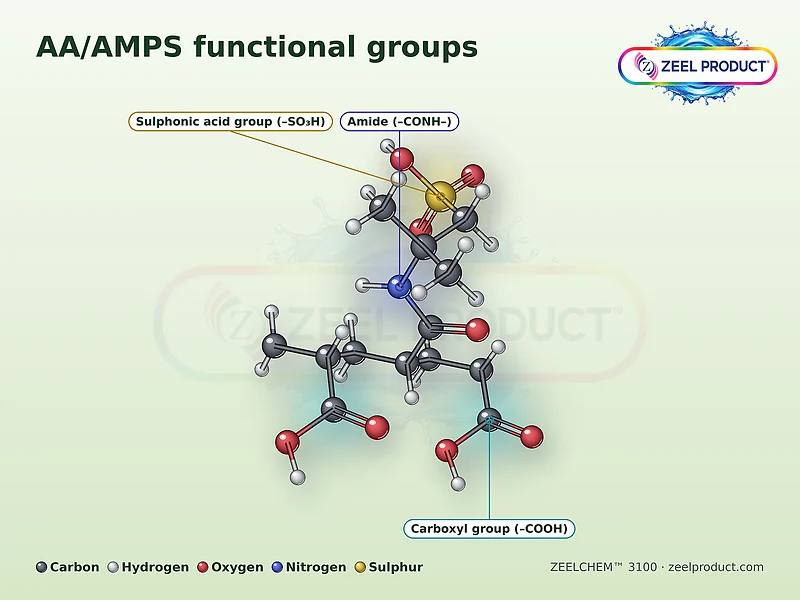
Carboxylate polymers disperse iron only moderately and can lose effectiveness as iron rises. Sulphonated copolymers and terpolymers resist iron poisoning and keep colloidal oxides suspended.
| Iron in recirculating water | Recommendation |
|---|---|
| < 0.5 mg/L | Normal program polymer |
| 0.5 – 2 mg/L | AA/AMPS 2–5 mg/L per mg/L Fe |
| > 2 mg/L | Terpolymer, plus fix the source (pre-treatment, corrosion control) |
Practical steps
- Measure total and dissolved iron in make-up and basin water.
- Improve pre-treatment: aeration and filtration for borewell iron.
- Tighten corrosion control, so less iron is generated in the system.
- Use side-stream filtration where possible.
- Dose the dispersant continuously; do not slug-feed.
Manganese behaves similarly but oxidises mainly with chlorine. Control chlorine dosing points and use a terpolymer for manganese-rich water. A clean system also responds better to biocides. See the ZEELCHEM™ biocide range.
 FEATURED PRODUCT
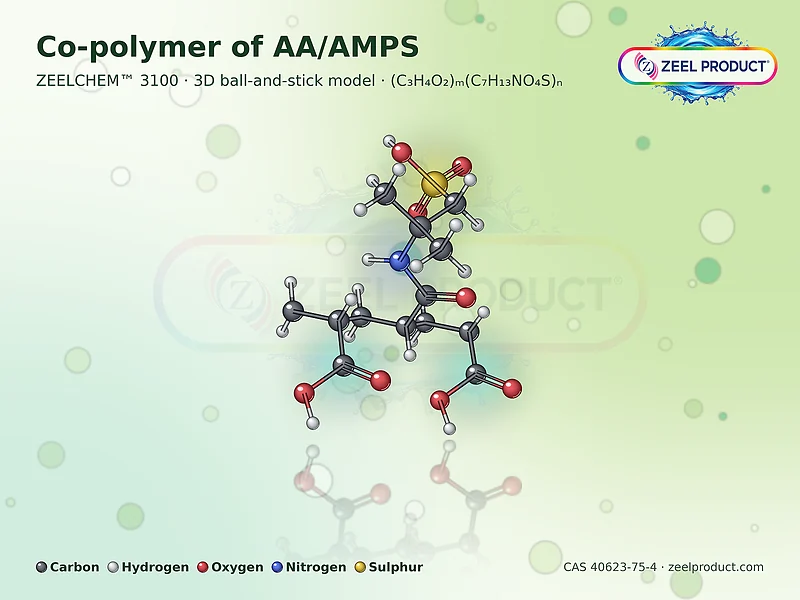
ZEELCHEM™ 3100 – Co-polymer of AA/AMPS
Sulphonated copolymer for calcium phosphate, zinc, iron and silica control in high-stress cooling and RO systems.
FAQ
Which polymer is best for iron dispersion?
Sulphonated polymers: AA/AMPS copolymer and terpolymers.
Does iron affect phosphonates?
Yes. Iron can adsorb and deactivate many phosphonates and polymers.
How much dispersant for iron?
About 2–5 mg/L of product per mg/L of iron.
More from ZEEL PRODUCT: zeelproduct.com · zeelproduct.net · ZEELCHEM™ range · online shop · zeelproductonline.co.in