Where the phosphate comes from
- Phosphate corrosion inhibitor programs: orthophosphate deliberately held at 5–15 mg/L.
- Phosphonate reversion: HEDP and ATMP slowly break down to orthophosphate, especially with chlorine.
- Recycled make-up: treated sewage (STP/TTP water) and RO reject often carry phosphate.
- Process leaks: fertiliser, food and detergent plants.
Why it's dangerous
Calcium phosphate (as tricalcium phosphate or hydroxyapatite) is far less soluble than calcium carbonate and forms hard, tenacious deposits. These deposits also remove phosphate from the water, so the steel loses its corrosion protection at the same moment the exchangers start fouling.
Predicting it
Calcium phosphate saturation depends on Ca, PO₄, pH and temperature. A practical rule: risk rises steeply when pH > 7.5, Ca > 300 mg/L as CaCO₃ and PO₄ > 5 mg/L, especially at skin temperatures above 50 °C. Treatment software computes a calcium phosphate saturation index for precise limits.
How polymers control it
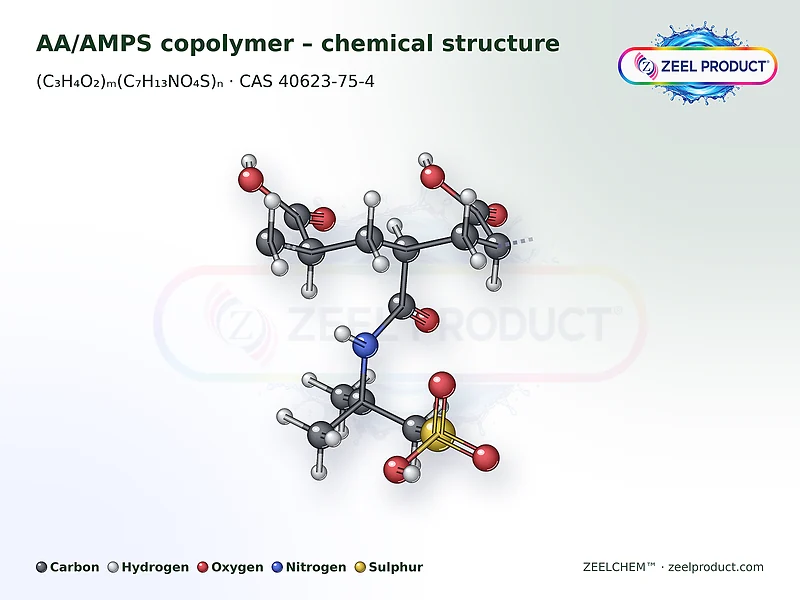
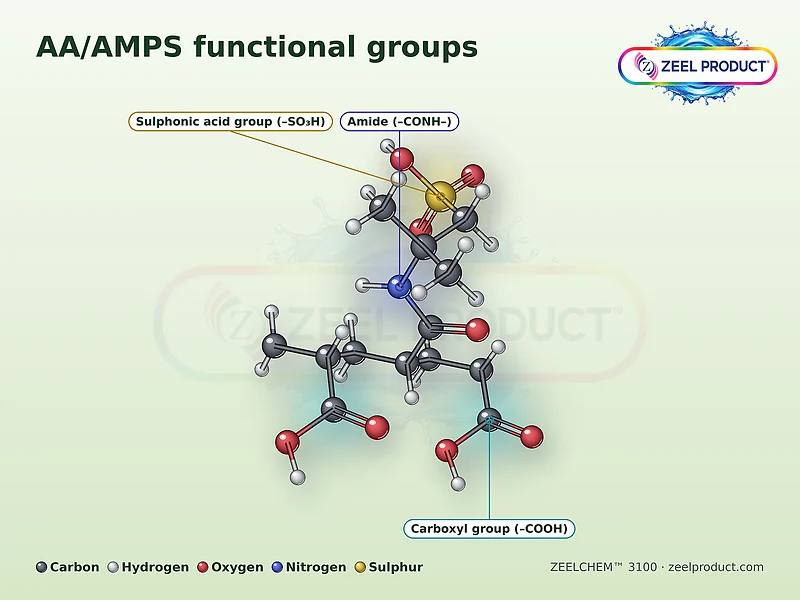
Carboxylate polymers adsorb on phosphate nuclei but then precipitate with calcium. Sulphonated polymers such as AA/AMPS and the terpolymer stay soluble and keep inhibiting. In laboratory static tests under standard conditions, they typically achieve over 90 % calcium phosphate inhibition at practical doses.
| Polymer | Ca-phosphate control |
|---|---|
| PAA (1000) | Poor |
| HPMA (200) | Poor |
| MA/AA (3000) | Fair |
| AA/AMPS (3100) | Excellent |
| Terpolymer (7000) | Excellent |
Dosage rule of thumb
Dose roughly 1–2 mg/L of AA/AMPS product, or 1.5–2.5 mg/L of terpolymer product, per mg/L of orthophosphate in the recirculating water. Use a higher ratio at high pH, temperature or calcium. Read the full stabilised phosphate program guide.
 FEATURED PRODUCT
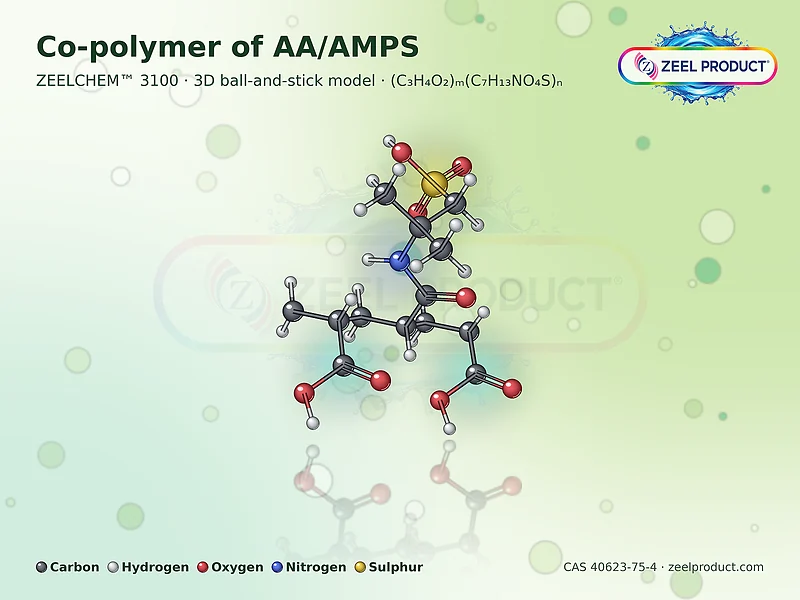
ZEELCHEM™ 3100 – Co-polymer of AA/AMPS
Sulphonated copolymer for calcium phosphate, zinc, iron and silica control in high-stress cooling and RO systems.
FAQ
Can PAA prevent calcium phosphate?
Not effectively. Use AA/AMPS or a terpolymer.
Why does my tower show phosphate scale without phosphate dosing?
Phosphonate breakdown or phosphate in recycled make-up water is the likely source.
At what pH does calcium phosphate form?
The risk rises sharply above about pH 7.5.
More from ZEEL PRODUCT: zeelproduct.com · zeelproduct.net · ZEELCHEM™ range · online shop · zeelproductonline.co.in