Why boilers scale
Even softened feed water carries some hardness, silica and iron. As water evaporates, these concentrate many times. On hot tube surfaces, calcium carbonate, calcium sulphate and silicates crystallise into insulating scale. Just 1 mm of scale can increase fuel use noticeably and cause tube overheating and failure.
Role of polymers in internal treatment
Modern internal treatment combines several functions:
- Precipitating/conditioning programs: phosphate converts hardness into soft calcium hydroxyapatite sludge.
- Polymers: keep that sludge and any residual hardness dispersed and non-adherent, so bottom blowdown can remove it.
- Oxygen scavengers and alkalinity control: protect against corrosion.
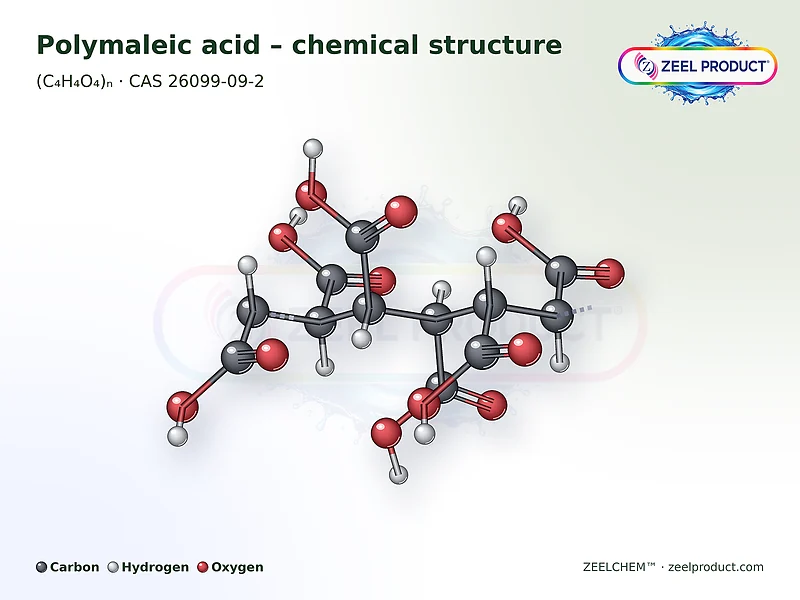
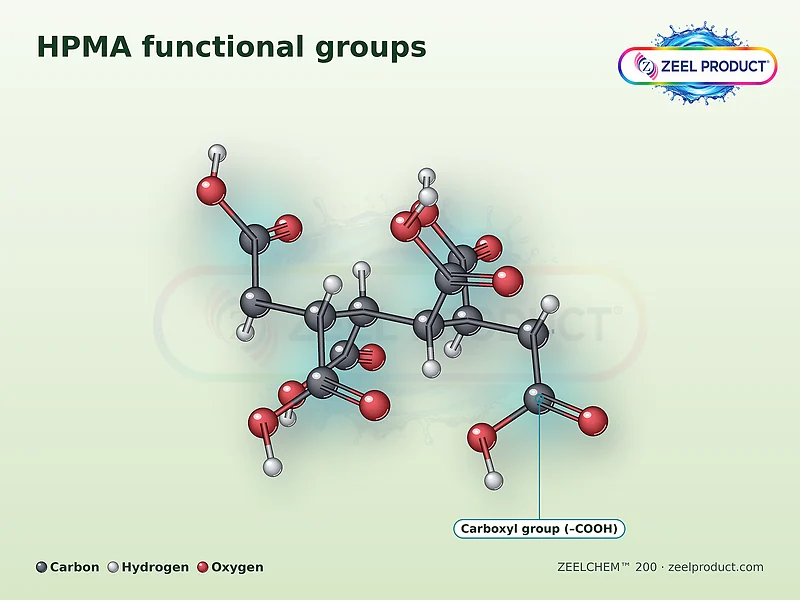
HPMA is chosen because it keeps threshold activity at boiler temperatures where many polyacrylates start to degrade. PAA or MA/AA add dispersion.
Dosage by boiler type
| Boiler | Typical polymer dose (feed water) | Notes |
|---|---|---|
| Small fire-tube / IBR boilers < 17 kg/cm² | 3 – 8 mg/L HPMA | Often with phosphate and sulphite |
| Water-tube 17 – 40 kg/cm² | 2 – 6 mg/L HPMA + 2 – 5 mg/L PAA/MA-AA | Control alkalinity and silica |
| Thermic-fluid / steam generators | As per OEM | Follow manufacturer limits |
| High pressure > 60 kg/cm² | Specialist all-volatile programs | Polymers generally not used |
Feed point and control
Dose into the feed-water tank or the feed pump suction, continuously and proportional to feed flow. Control TDS, P-alkalinity, phosphate and silica in boiler water by adjusting continuous blowdown. Polymer cannot compensate for missing blowdown.
Practical tips
- Clean existing scale first: polymers prevent new scale but remove old deposits only slowly.
- Keep feed-water hardness as low as possible through softener regeneration.
- Check condensate for contamination, since oil and process leaks drive fouling.
For boiler chemicals beyond polymers (oxygen scavengers, alkalinity builders, amines), see the ZEELCHEM™ boiler range.
 FEATURED PRODUCT
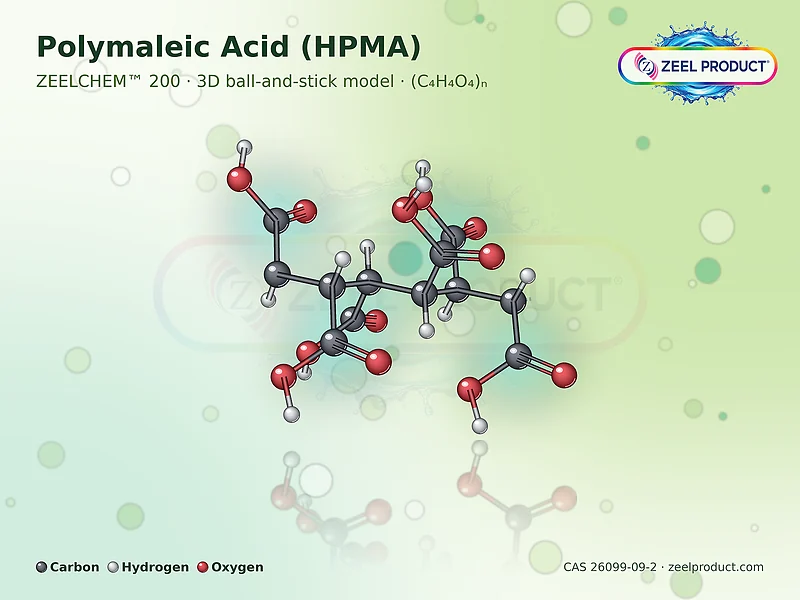
ZEELCHEM™ 200 – Polymaleic Acid (HPMA)
High-temperature scale inhibitor for boilers, evaporators, desalination and high-alkalinity water, effective up to 300 °C.
FAQ
Can HPMA be used in high pressure boilers?
Generally not above about 60 kg/cm². Those boilers use all-volatile or coordinated phosphate programs without polymers.
Can I use only HPMA without phosphate?
In small boilers with good soft water, a polymer-only program is possible. For harder feed water, combine it with phosphate.
Where should HPMA be dosed?
Into the feed tank or feed pump suction, continuously.
More from ZEEL PRODUCT: zeelproduct.com · zeelproduct.net · ZEELCHEM™ range · online shop · zeelproductonline.co.in