 By ZEELCHEM Technical Team · ZEEL PRODUCT, Vadodara
Published · Updated · 3 min read
Quick answer
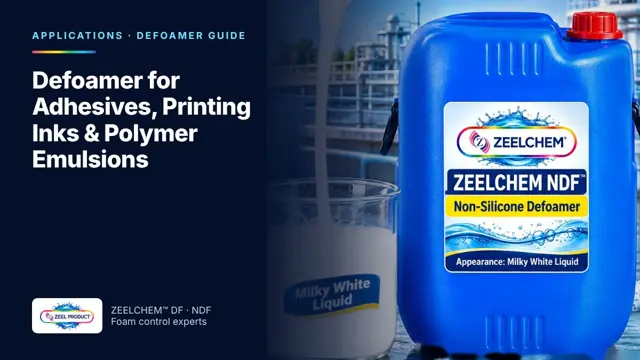
Water-based adhesives, inks and polymer emulsions foam during polymerisation, monomer stripping, mixing, filling and high-speed application. Non-silicone defoamers (mineral oil, ester or polyether based, such as ZEELCHEM™ NDF) are often preferred because they avoid wetting and adhesion problems, while modified silicone types are used where stronger action is needed and tested as compatible.
Where foam occurs
- Emulsion polymerisation and residual-monomer stripping.
- Formulating adhesives with high-speed mixers.
- Ink circulation on flexo and gravure presses.
- Roller and nozzle application of adhesives.
What to check
| Property | Why it matters |
|---|---|
| Compatibility (no haze, no separation) | Product stability |
| Wetting on substrate | Craters and poor coverage |
| Adhesion / peel strength | Some defoamers weaken bonds |
| Print quality | Pinholes and voids in ink film |
| Long-term efficiency | Defoamer may lose effect on storage |
Frequently asked questions
Which defoamer is used in acrylic emulsion?
Mineral-oil and other non-silicone defoamers are common; the grade must be tested for compatibility.
Can defoamer reduce adhesive strength?
An incompatible or overdosed defoamer can, so test peel strength after adding it.
Why does printing ink foam?
High-speed circulation and pumping entrain air into the surfactant-containing ink.
Key takeaways
- Non-silicone is usually the first choice for adhesives and inks.
- Test wetting, adhesion and print quality.
- Check efficiency after storage.
More from ZEEL PRODUCT
- Explore our non-silicone antifoam supplier on zeelproductonline.co.in.
- Need maximum foam knockdown instead? See this silicone defoamer for industrial use page on zeelproduct.com.
Related searches: defoamer for adhesivedefoamer for printing inklatex defoamerdefoamer for polymer emulsionacrylic emulsion defoamer